Turn translation & captions into revenue with Sponsor Logos → Learn More
Offer floor audio without equipment rental with Silent Theater → Learn More
See how public safety agencies use Wordly to deliver real-time translation and captions during emergencies
When critical updates go out in English only, the roughly 22% of the U.S. population that speaks another language at home can be left vulnerable to misinformation, confusion, and delayed response. In a crisis, whether a natural disaster, health emergency, public safety threat, or other critical situation, delivering accurate real-time information in the languages people actually speak can be the difference between safety and harm.
Wordly, the pioneer of AI translation, is transforming emergency communication by making public safety information universally accessible. By enabling government agencies, schools, healthcare providers, and other organizations to instantly communicate in dozens of languages, Wordly ensures diverse communities receive timely, life-saving updates. Whether it's an evacuation order, severe weather alert, public health advisory, or other emergency notification, Wordly helps break down language barriers, ensuring clarity, safety, and inclusivity when it matters most.
Public safety emergencies present numerous communication challenges:
Wordly provides an affordable, scalable solution for real-time translation in dozens of languages - eliminating the high costs and logistical challenges of human interpreters, such as scheduling, availability, and delays. Government agencies, emergency response teams, schools, healthcare providers, and other organizations can rely on Wordly to deliver timely, multilingual updates in a variety of critical situations.
Wordly can be used for:
By breaking down language barriers, Wordly ensures all communities receive critical, real-time updates when they need them most.
Los Angeles County is a compelling example. The county used Wordly during press briefings to provide real-time multilingual updates, combat misinformation, and ensure residents received critical information in their preferred language. With live translation available in dozens of languages, Los Angeles County bridged language barriers and kept all communities informed.
Officials also took an active role in debunking misinformation, directing residents to verified sources and emphasizing the importance of relying on official updates. By prioritizing multilingual communication and real-time fact-checking, the county ensured that every resident, regardless of language, had access to life-saving information during the crisis. More broadly, when public agencies integrate live translation and captioning into their emergency response strategies, they can significantly improve safety outcomes and community preparedness.
In an increasingly diverse world, effective emergency communication must go beyond a one-size-fits-all approach. Language barriers can mean the difference between confusion and clarity, hesitation and action, or even life and death. By providing real-time multilingual translation and AI captioning, Wordly empowers organizations to deliver critical information instantly, ensuring no community is left behind in times of crisis.
Key Takeaways:
Wordly is revolutionizing emergency response by making public safety information accessible. As more organizations recognize the importance of language inclusivity in crisis communication, Wordly continues to play a vital role in breaking language barriers and saving lives.
Wordly is the pioneer and leader in live interpretation, providing a high-quality, secure, easy-to-use, and affordable live AI translation and caption solution for communicating across multiple languages. Wordly translates dozens of languages in real time, making in-person and virtual meetings and events more inclusive, accessible, and engaging.
Its SaaS platform meets enterprise-grade security and privacy standards and eliminates the need for human interpreters or special equipment. Millions of users across thousands of organizations rely on Wordly to make their events and meetings accessible to everyone.
See it in action – book a personalized demo.
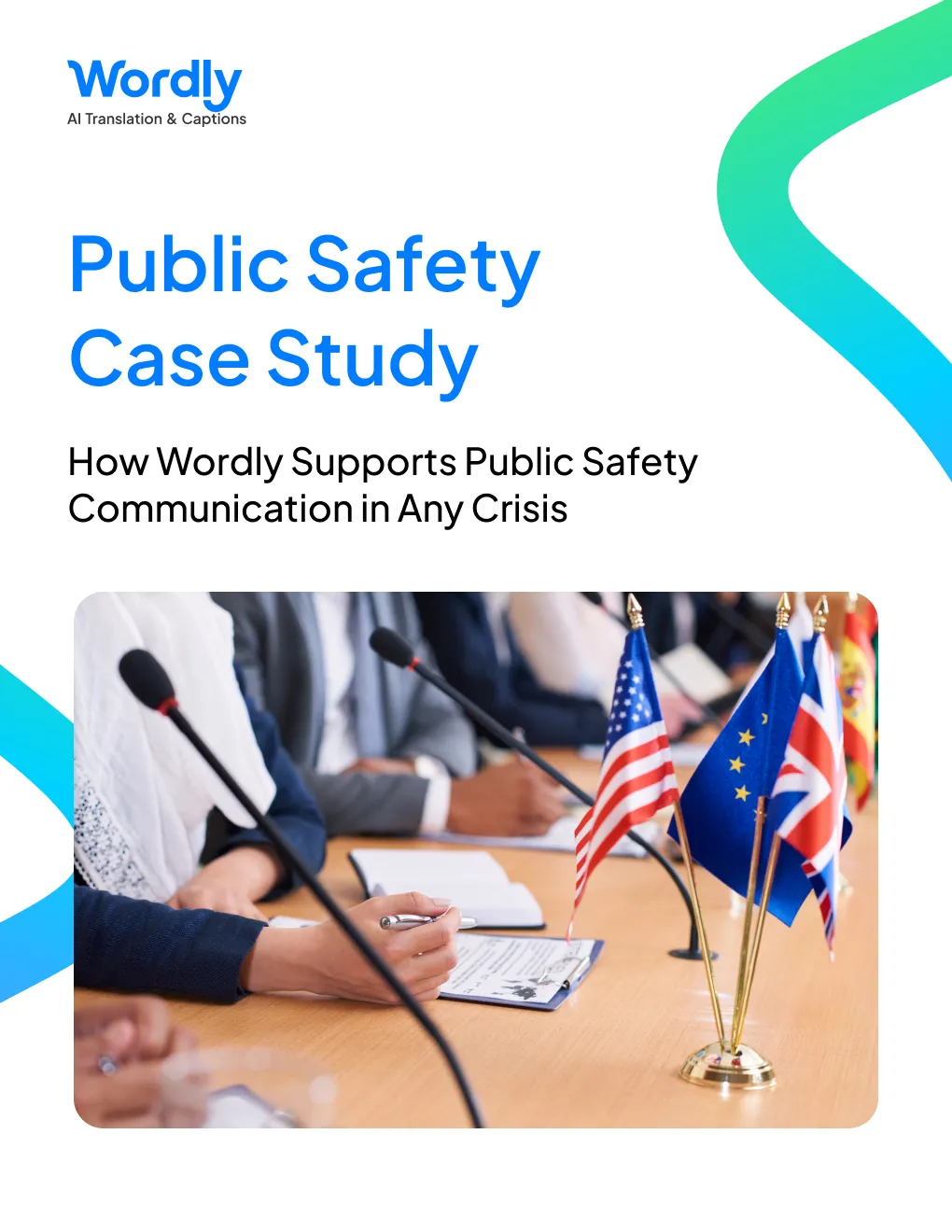
In times of crisis, clear multilingual communication saves lives. This case study shows how Wordly supports public safety agencies by delivering real-time translation and captions during emergencies like wildfires, health outbreaks, and weather alerts. Learn how government teams are breaking language barriers to reach diverse communities fast.
Download Case Study.avif)
.png)