Turn translation & captions into revenue with Sponsor Logos → Learn More
Offer floor audio without equipment rental with Silent Theater → Learn More
See how a public school used Wordly live translation and captions to improve access in the classroom and build more inclusive communication across its community
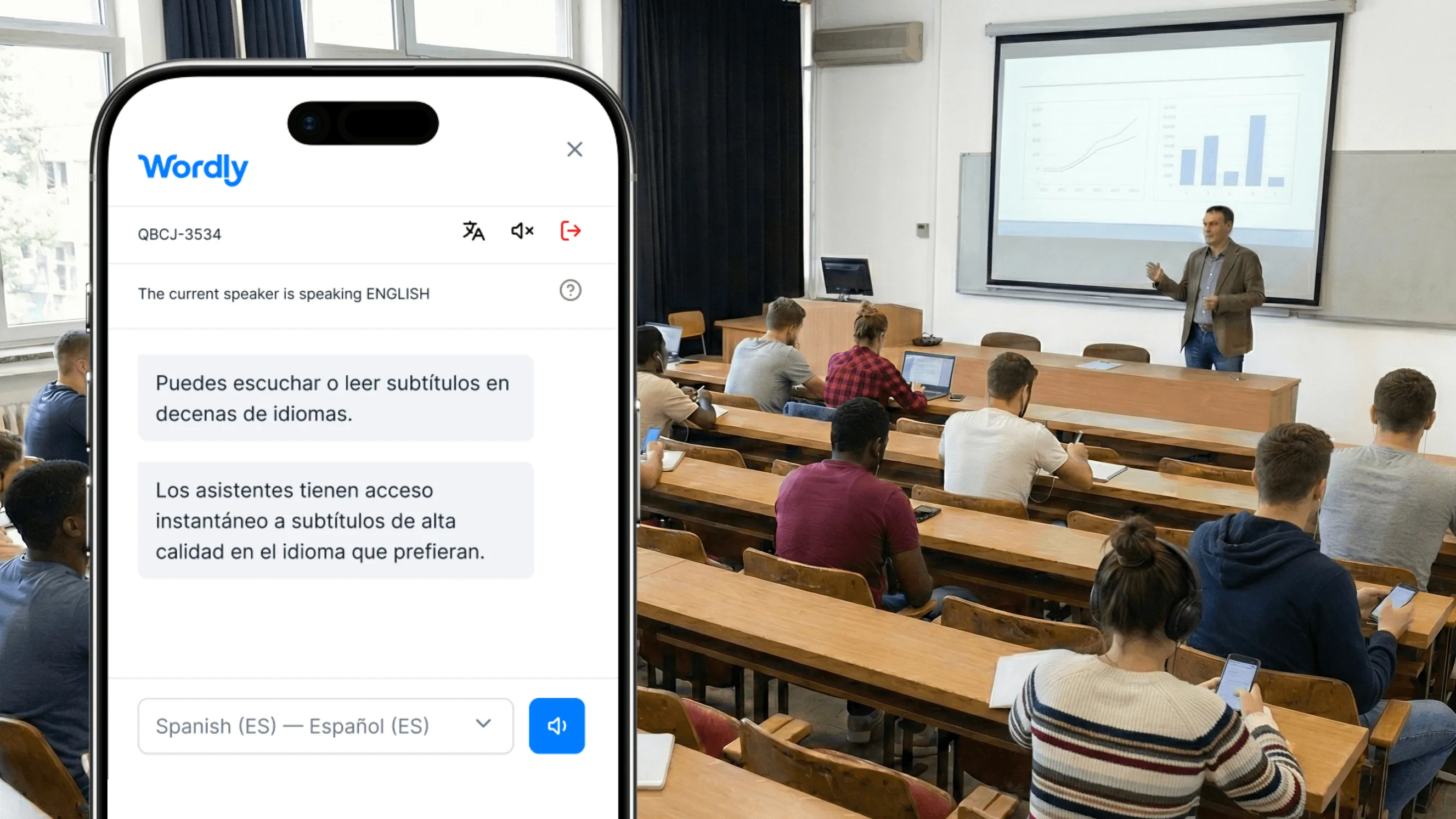
Schools are using AI translation to give students and families real-time access to instruction, events, and communications in their own language, usually on their own phones, without interpreters or special equipment. Common uses include translating classroom lessons for multilingual and English-language learners, making events like back-to-school nights and parent-teacher conferences accessible to non-English-speaking families, adding live captions for students who are deaf or hard of hearing, and supporting adult English classes and other community programs. Because it runs live and on personal devices, AI translation scales to dozens of languages at once and keeps students learning alongside their peers instead of being pulled out for separate support.
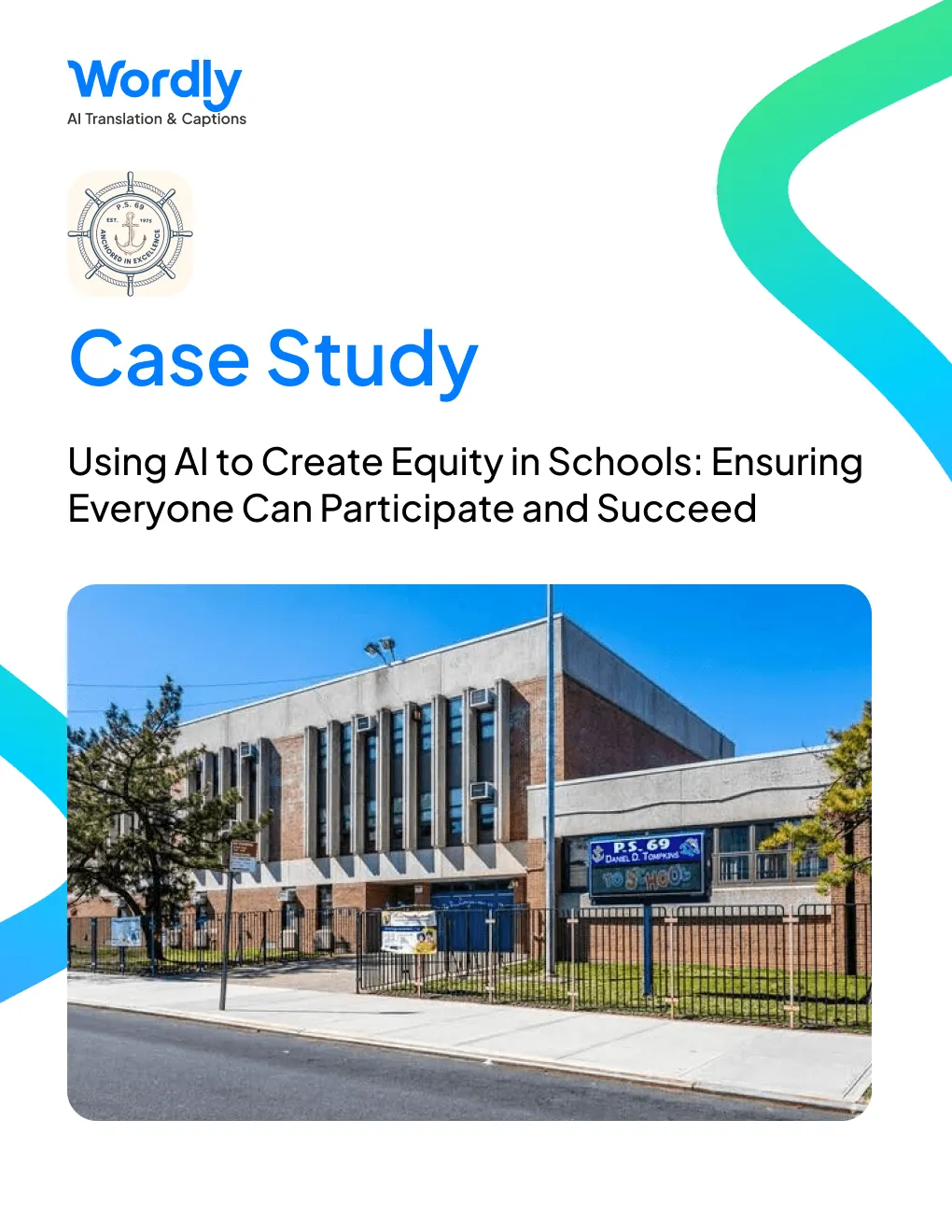
P.S. 69 Daniel D. Tompkins School in Staten Island is one example. The school uses Wordly to translate classroom instruction for multilingual learners and to welcome families into school events and meetings, replacing makeshift fixes with real-time translation in dozens of languages and dialects.
Removing language barriers in a diverse school takes a scalable, real-time solution. Ad hoc fixes like portable translators, text-only apps, and pairing students to help one another only offer quick fixes, and don’t guarantee that students can fully participate in lessons or that parents can communicate with teachers and take part in their child's education. That gap was clear at P.S. 69 Daniel D. Tompkins School in Staten Island, New York, where a highly diverse, multilingual community made it essential that every student could engage in the classroom and every parent could participate in their child's education.
The school serves 729 students from preschool through fifth grade, representing a wide range of cultural, linguistic, and socioeconomic backgrounds. Ranked #278 out of 2,810 of New York's most diverse public schools, the student body is roughly 38% White, 38% Asian or Asian/Pacific Islander, and 21% Hispanic/Latino. Sixteen percent of students are English learners, and 70% come from economically disadvantaged households. Families speak at least seven languages, including Arabic, Chinese (Mandarin and Cantonese), Albanian, French, Russian, Spanish, and Urdu, as well as multiple dialects.
Recognizing the limitations of these prior approaches, school leadership began looking for a scalable, real-time solution that could remove language barriers and allow both students and parents to participate fully and confidently.
P.S. 69 uses Wordly real-time AI translation across the school day, from classroom instruction to school events and parent meetings, to bring students, parents, and educators closer together. Unlike earlier text-only tools, Wordly provides live translation in dozens of languages and dialects, eliminating the need for in-person interpreters and allowing even parents who struggle to read in their native language to fully understand school communications, attend parent-teacher meetings, and support their children's education. The platform was introduced by a PTA member who recognized its potential to bridge language barriers, and its audio translation feature quickly gained support from staff and administrators.
P.S. 69 used Wordly during:
For the more than 67 million people in the U.S. who speak a language other than English at home, school events such as parent-teacher conferences and orientations can feel isolating. Wordly transforms these moments into opportunities for connection by offering instant, on-demand education translation and captions, enabling families to communicate directly with educators and strengthening trust and collaboration.
By implementing Wordly real-time AI translation, P.S. 69 transformed language from a barrier into a bridge. The results were immediate and powerful, proving that when AI is used thoughtfully, it can bring students, parents, and educators closer together.
Students Impact:
“For the first time, students were able to fully participate alongside their peers without feeling singled out for language differences,” said P.S. 69 Climate & Culture Coordinator Gabriela Mineo. “This built their confidence, strengthened their sense of belonging, and allowed them to learn and thrive in an inclusive classroom environment.”
Parent Impact:
“Even if parents don’t speak English, that no longer prevents them from supporting their child’s growth,” continued Mineo. “With tools like Wordly, they can fully contribute to their child’s success from home, helping create a true community of support for every student.”
Building on its success, P.S. 69 plans to continue expanding the use of AI translation to support even more student and parent interactions across the school. By integrating Wordly into additional classrooms, school events, and parent engagement opportunities, the school aims to ensure that every student can fully participate in learning, and every family can contribute to their child’s success, regardless of language.
With continued expansion, P.S. 69 proves that AI can be a bridge, not a barrier, strengthening learning, engagement, and community for years to come.

P.S.69 Daniel D. Tompkins School is located in Staten Island, New York. The entire school community (Staff, Parents/Guardians, Partnership Organizations) works as a team to ensure the academic, social, and emotional success of students by celebrating the unique identities of each one.
The school believes in nurturing lifelong learners who are self-aware, self-directed, empowered, and vocal in each and every school experience. Academic Rigor, Individualized Goals, Conflict Resolution, and Emotional Awareness are the cornerstones of ensuring all students are "Anchored In Excellence."
Wordly helps make every meeting, event, and conference instantly accessible across languages. Its AI-powered platform provides accurate translation and captioning in dozens of languages, along with transcripts and summaries, streamlining communication at any scale. Attendees can join via a simple QR code or link, with no downloads or extra equipment required, ensuring seamless participation for virtual, hybrid, or in-person events.
Enterprise-ready, secure, and compliant, Wordly supports everything from small team meetings to large international conferences. It allows everyone to follow along, contribute, and engage without the expense and logistics of human interpreters.
See it in action – book a personalized demo.
See how a school used Wordly live translation and captions to better support multilingual students and families, improve access in the classroom, and create more inclusive communication across the school community.
Download Case Study.avif)
.png)