Wordly Tops 8 Million Users, Ranks No. 103 on Deloitte Fast 500 → Read More
See how a construction company used Wordly to translate safety meetings, onboard new hires, and help employees understand their benefits.
Construction has one of the most diverse workforces in the United States. According to the Center for Construction Research and Training, Hispanic workers accounted for 34% of the U.S. construction workforce in 2023, more than double their share in 2000. As workforces become increasingly multilingual, construction companies face growing pressure to ensure every employee can access critical safety information, operational updates and workplace resources regardless of language.
For a large U.S. construction company, the challenge extended beyond the jobsite. Multilingual employees needed to understand safety procedures, equipment requirements and operational instructions in a language they understood. New hires needed to learn company policies and workplace expectations, while HR teams needed to explain benefits and other resources in multiple languages.
Traditional approaches, including translated documents, bilingual supervisors and separate meetings with translators for each language group, made it difficult and time-consuming to communicate consistently with all employees. Written translations could not address questions that arose during live presentations, while coordinating multiple sessions required additional time and resources.
The company needed a more efficient solution that would allow it to bring everyone together for a single meeting and ensure employees could follow the information in their preferred language.
The construction company turned to the Wordly AI translation and captioning platform to help employees access critical information during safety meetings, onboarding and HR presentations, enabling the company to communicate with its multilingual workforce in a single meeting.
With Wordly, presenters are able to speak normally while employees access translated audio and captions on their smartphones. Workers select their preferred language and can listen through headphones or read captions on their screens.
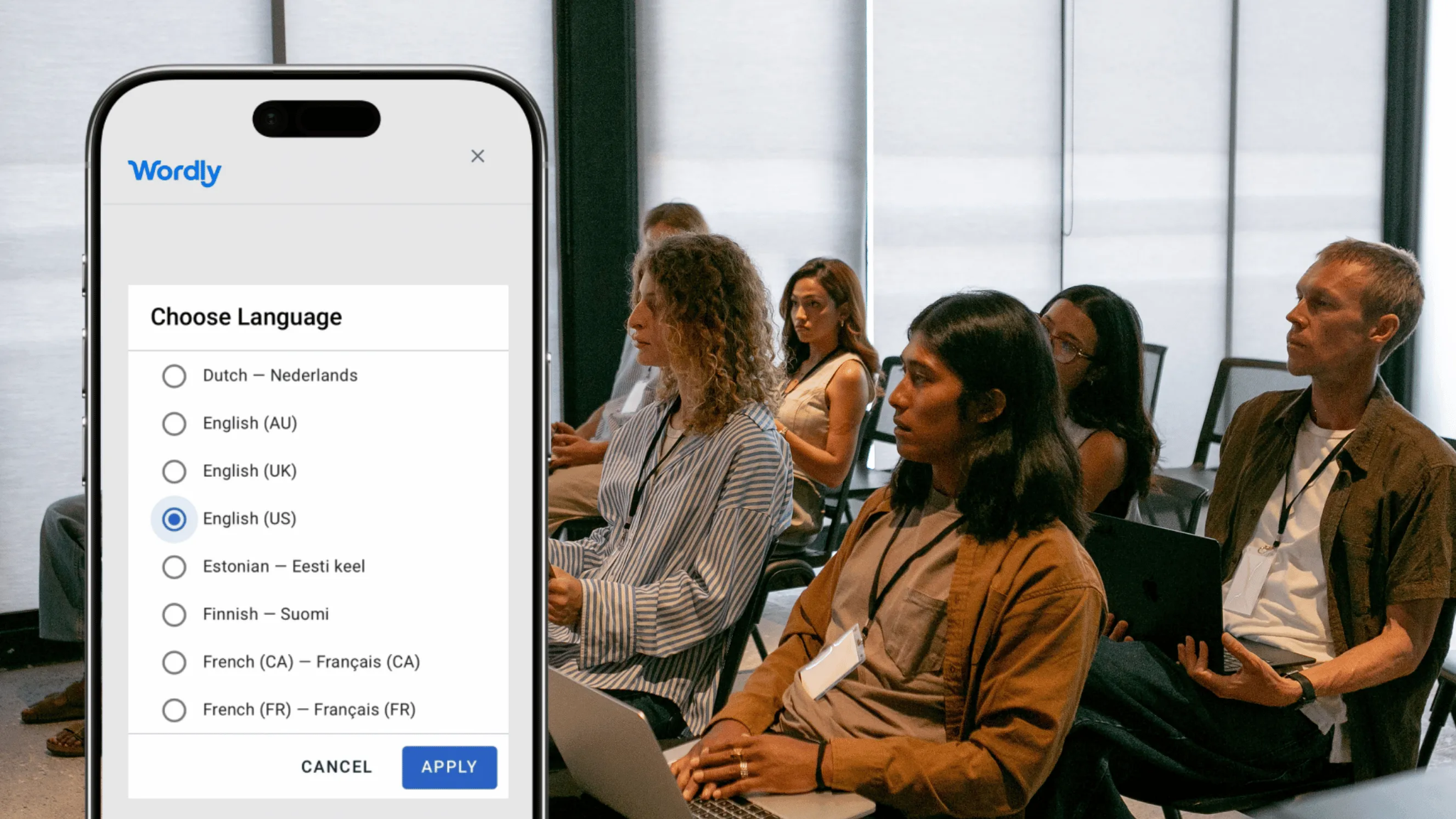
By using Wordly for safety meetings, onboarding and HR presentations, the company established a scalable approach to communicating with a multilingual workforce. Instead of coordinating multiple meetings for different language groups, presenters now communicate once while employees receive translated audio and captions individually. This helps reduce communication barriers while improving access to important workplace information.
The company used the approach to support several important workplace priorities, including:
While the company uses Wordly to make these communications more accessible, the broader objective is to help ensure employees can understand the information they need to work safely, perform their jobs and participate in the workplace.
The need for multilingual communication extends far beyond construction. According to the U.S. Census Bureau’s 2024 American Community Survey, approximately 74.1 million people age five and older in the United States speak a language other than English at home, representing 23% of that population. As workforces become increasingly diverse, organizations across industries face growing pressure to ensure employees can access important information regardless of language.
Industries including manufacturing, warehousing, logistics, transportation, energy, utilities, healthcare and hospitality all face similar challenges when communicating safety requirements, training materials, company policies and operational updates to multilingual employees.
As a result, many organizations are turning to Wordly real-time AI translation to make workforce communication more accessible, scalable and efficient. Rather than conducting separate meetings for each language group, organizations can communicate once while reaching employees across multiple languages simultaneously.
For any organization with a multi-language workforce, Wordly provides a solution that supports critical employee communications today while creating opportunities to expand multilingual access across additional training programs, meetings and workplace initiatives in the future.
From safety briefings and onboarding sessions to benefits presentations and workforce updates, effective communication helps employees stay informed, engaged and prepared to do their jobs.
Wordly enables organizations to communicate once and reach multilingual teams through live AI translation and captions in dozens of languages using employees’ own smartphones and headphones.
Book a demo to learn how Wordly can improve safety communication, streamline multilingual meetings and create a more connected workforce.
Construction companies need every worker to understand critical safety information, regardless of language. Learn how a large U.S. construction company used live AI translation and captions from Wordly to deliver safety meetings, onboarding and HR presentations to its multilingual workforce in a single meeting.
Download Case Study


