
Leitfaden zur Einhaltung sprachlicher Vorschriften für gemeinnützige Organisationen und Verbände: ADA, Titel VI und Barrierefreiheit erklärt
.avif)
.avif)
Inhaltsverzeichnis:
- Warum Sprachzugang für Non-Profits und Verbände wichtig ist
- Wie können Non-Profits die Anforderungen des ADA und von Title VI des Civil Rights Act erfüllen?
- Wie gelten Section 508 und WCAG 2.1 für digitale Plattformen von Non-Profits?
- Übersetzungstechnologie nutzen, um die Reichweite bei begrenztem Budget zu vergrößern
- Gesetzliche Anforderungen an die sprachliche Barrierefreiheit für Non-Profits und Verbände
- Sicherheit und KI-gestützte Übersetzung in Einklang bringen
- Unterstützung für vielfältige Gemeinschaften und Mitglieder
- Warum Untertitel für Veranstaltungen und Webinare unverzichtbar sind
- Häufige Compliance-Fehler bei Non-Profits und Verbänden vermeiden
- Häufig gestellte Fragen
- Nächste Schritte für Non-Profits und Verbände
Non-Profits, Verbände und NGOs, die vielfältige Gemeinschaften unterstützen oder staatliche Fördermittel erhalten, müssen je nach Art ihrer Dienste und Zielgruppen die Anforderungen an den Sprachzugang gemäß Title VI des Civil Rights Act, dem Americans with Disabilities Act (ADA), Section 508 und den WCAG 2.1 erfüllen. Die Einhaltung dieser Vorschriften erfordert einen sinnvollen Zugang für Menschen mit begrenzten Englischkenntnissen (LEP) sowie für Menschen mit Hör- oder Kommunikationsbehinderungen – sei es bei persönlichen Dienstleistungen, öffentlichen Veranstaltungen, virtuellen Meetings, Online-Materialien oder digitalen Plattformen. KI-gestützte Übersetzungs- und Untertitelungstools wie Wordly helfen Non-Profits und Verbänden dabei, diese Standards kosteneffizient zu erfüllen. Sie ermöglichen einen mehrsprachigen Echtzeitzugang für Gemeinschaftsprogramme, Mitgliederveranstaltungen, Schulungen und Online-Inhalte, ohne die hohen Kosten für herkömmliche Dolmetscher, die das Budget vieler Non-Profits oft übersteigen.
Warum Sprachzugang für Non-Profits und Verbände wichtig ist
Für Non-Profits und Berufsverbände steht die Mission an erster Stelle. Ob Sie soziale Basisdienste leisten, sich für politische Veränderungen einsetzen oder Fachleute einer Branche vernetzen – Ihr Ziel ist es, Menschen zu helfen. Wenn jedoch Sprachbarrieren bestehen, schließen Sie möglicherweise unbeabsichtigt genau die Bevölkerungsgruppen aus, die Sie eigentlich erreichen möchten.
Die Priorisierung von Sprachzugang ist nicht nur eine Frage der Reichweite, sondern oft eine rechtliche Notwendigkeit. Gesetze wie Title VI des Civil Rights Act von 1964 und der Americans with Disabilities Act (ADA) setzen strenge Standards für Organisationen, insbesondere wenn diese staatliche Fördermittel erhalten. Glücklicherweise ermöglichen innovative Tools wie KI-Übersetzung und Live-Untertitelung von Wordly es Non-Profits, diese Verpflichtungen effizient zu erfüllen und sicherzustellen, dass Budgetbeschränkungen der Inklusion nicht im Weg stehen. Fortschritte in der KI-Übersetzung und Untertitelung durch Unternehmen wie Wordly verändern grundlegend, wie Non-Profits und Verbände diese Anforderungen skalierbar umsetzen können.
Wie können Non-Profits die Anforderungen des ADA und von Title VI des Civil Rights Act erfüllen?
Die rechtliche Landschaft kann für gemeinnützige Organisationen komplex sein, doch das Verständnis zweier zentraler Gesetze ist unerlässlich: der ADA und Title VI.
Title VI des Civil Rights Act legt fest, dass in den Vereinigten Staaten niemand aufgrund von Rasse, Hautfarbe oder nationaler Herkunft von der Teilnahme an Programmen oder Aktivitäten, die staatliche Finanzhilfen erhalten, ausgeschlossen, von deren Vorteilen ausgeschlossen oder in diesen diskriminiert werden darf.
- Auswirkungen auf gemeinnützige Organisationen: Wenn Ihre Organisation staatliche Zuschüsse, Aufträge oder Darlehen erhält, sind Sie wahrscheinlich dazu verpflichtet, Personen mit begrenzten Englischkenntnissen (Limited English Proficiency, LEP) einen „sinnvollen Zugang“ zu ermöglichen. Dies bedeutet häufig die Bereitstellung von Übersetzungs- und Dolmetscherdiensten.
Der Americans with Disabilities Act (ADA) verbietet die Diskriminierung von Menschen mit Behinderungen.
- Auswirkungen auf gemeinnützige Organisationen: Gemäß Titel III müssen gemeinnützige Organisationen, die als öffentliche Einrichtungen fungieren (wie Tafeln, Notunterkünfte, Kindertagesstätten oder Bildungszentren), eine effektive Kommunikation gewährleisten. Dazu gehören Hilfsmittel und Dienstleistungen wie qualifizierte Gebärdendolmetscher oder Echtzeit-Untertitelung für gehörlose oder schwerhörige Menschen.
Um die Einhaltung der Vorschriften sicherzustellen, sollten gemeinnützige Organisationen:
- Eine Vier-Faktoren-Analyse durchführen: Bewerten Sie die Anzahl der betreuten Personen mit begrenzten Englischkenntnissen, die Häufigkeit des Kontakts, die Bedeutung des Dienstes und die verfügbaren Ressourcen.
- Einen Sprachzugangsplan entwickeln: Dokumentieren Sie, wie Sie Personen mit begrenzten Englischkenntnissen unterstützen und Ihr Personal in diesen Verfahren schulen.
- Technologie nutzen: Setzen Sie kostengünstige KI-Tools ein, um Dolmetscherdienste bei Bedarf ohne die hohen Kosten für menschliche Sprachmittler anzubieten.
Wie gelten Section 508 und WCAG 2.1 für digitale Plattformen gemeinnütziger Organisationen?
Ihre Website, Spendenportale und Lernmanagementsysteme (LMS) für Mitglieder sind das Aushängeschild Ihrer Organisation.
Section 508 schreibt vor, dass elektronische Informations- und Kommunikationstechnologien für Menschen mit Behinderungen zugänglich sein müssen. Obwohl dies unmittelbar für Bundesbehörden gilt, verlangen viele staatliche Förderprogramme von den Empfängern (gemeinnützigen Organisationen), dass sie diese Standards für ihre digitalen Angebote einhalten.
WCAG 2.1 (Web Content Accessibility Guidelines) liefert die technischen Spezifikationen für Barrierefreiheit im Web. Für Verbände, die Online-Zertifizierungskurse anbieten, oder gemeinnützige Organisationen, die Online-Spenden sammeln, ist die Einhaltung von WCAG 2.1 Level AA der Goldstandard.
Wichtige Aspekte für digitale Barrierefreiheit sind:
- Videoinhalte: Alle aufgezeichneten Webinare und Werbevideos sollten über präzise Untertitel verfügen.
- Live-Veranstaltungen: Virtuelle Bürgerversammlungen und Jahreskonferenzen sollten Optionen für Live-Untertitelung und Übersetzung bieten.
- Website-Navigation: Stellen Sie sicher, dass Screenreader Ihre Website erfassen können und die Inhalte in einfacher Sprache verfasst sind, um eine präzise Übersetzung zu ermöglichen.
Reichweite kosteneffizient erweitern durch Übersetzungstechnologie
Eine der größten Hürden für gemeinnützige Organisationen und Verbände ist das Budget. Die Beauftragung traditioneller Dolmetscher für jedes Community-Meeting, jede Vorstandssitzung oder jedes Schulungswebinar ist oft unbezahlbar. Hier erweist sich KI-Übersetzungstechnologie als echter Wendepunkt.
KI-gestützte Lösungen wie Wordly ermöglichen es Verbänden und gemeinnützigen Organisationen, Live-Audioübersetzungen und Untertitelungen in Dutzenden von Sprachen zu einem Bruchteil der Kosten herkömmlicher Methoden anzubieten. Diese Technologie ermöglicht es Ihnen:
- Mehrsprachige Community-Foren zu veranstalten.
- Echtzeit-Untertitel für Jahresgalas oder Spendenveranstaltungen bereitzustellen.
- Schulungsmaterialien für Freiwillige sofort zu übersetzen.
Durch den Einsatz skalierbarer Technologie können Sie mehr Mittel in Ihre Kernprogramme investieren und gleichzeitig eine solide Compliance wahren.
Rechtliche Anforderungen an die sprachliche Barrierefreiheit für gemeinnützige Organisationen und Verbände
Die Compliance-Anforderungen variieren je nach Finanzierungsquelle und Art Ihrer Dienstleistungen.
- Empfänger von Bundesmitteln: Müssen Title VI einhalten. Die Nichtbereitstellung von Sprachzugang kann zum Verlust von Bundesmitteln oder zu Ermittlungen durch das Justizministerium führen.
- Öffentliche Einrichtungen: Müssen den ADA einhalten. Dies umfasst sowohl den physischen Zugang als auch den barrierefreien Zugang zur Kommunikation.
- Gesundheits- und Sozialwesen: Gemeinnützige Organisationen in diesen Sektoren unterliegen häufig strengeren Vorschriften gemäß Section 1557 des Affordable Care Act, der qualifizierte Dolmetscherdienste vorschreibt.
Verbände müssen diese Gesetze ebenfalls beachten, wenn sie berufliche Zertifizierungen anbieten oder öffentliche Konferenzen abhalten, um sicherzustellen, dass Mitglieder mit Behinderungen oder Sprachbarrieren nicht diskriminiert werden.
Sicherheit und KI-gestützte Übersetzung in Einklang bringen
Gemeinnützige Organisationen und Verbände verarbeiten häufig sensible Daten, darunter Finanzinformationen von Spendern und persönliche Daten schutzbedürftiger Klienten. Bei der Einführung von KI-Tools für den Sprachzugang darf die Sicherheit kein bloßer Nebengedanke sein.
Organisationen sollten bei Übersetzungsanbietern auf Folgendes achten:
- Einhaltung von SOC 2-Standards: Dies bescheinigt, dass der Anbieter Daten so verwaltet, dass Privatsphäre und Vertraulichkeit geschützt sind.
- Keine Datenspeicherung: Stellen Sie sicher, dass Ihre Meeting-Transkripte oder Audioaufnahmen nicht unbegrenzt gespeichert oder ohne Zustimmung zum Training öffentlicher KI-Modelle verwendet werden.
- Verschlüsselung: Daten sollten sowohl bei der Übertragung als auch bei der Speicherung verschlüsselt sein.
Die Sicherheit von Wordly stellt sicher, dass Kundendaten gemäß den bewährten Branchenpraktiken geschützt sind, und Wordly verpflichtet sich, über alle unsere Dienste hinweg eine sichere Lösung bereitzustellen.
Unterstützung vielfältiger Gemeinschaften und Mitglieder
Inklusion ist für gemeinnützige Organisationen oft ein zentraler Wert. Inhalte in der Muttersprache der Nutzer anzubieten, signalisiert Respekt und Wertschätzung.
- Für Verbände: Es öffnet Ihre Mitgliedschaft für internationale Fachkräfte und steigert das Engagement in globalen Niederlassungen.
- Für gemeinnützige Organisationen: Es schafft Vertrauen. Klienten suchen eher Hilfe und befolgen Ratschläge, wenn sie in der Sprache kommunizieren können, die sie am besten verstehen.
KI-Übersetzung erleichtert diese Verbindung, indem sie Sprachbarrieren abbaut. Ob bei einer Breakout-Session auf einer Konferenz oder einem persönlichen Aufnahmegespräch – Technologie stellt sicher, dass jeder teilhaben kann.
Warum Untertitel für Veranstaltungen und Webinare wichtig sind
KI-Untertitelung ist eine universelle Lösung, von der alle profitieren, nicht nur Menschen mit Hörbeeinträchtigung.
- Barrierefreiheit: Unverzichtbar für gehörlose und schwerhörige Menschen.
- Verständnis: Hilft Nicht-Muttersprachlern, komplexen Themen oder Fachbegriffen zu folgen, wie sie oft in Schulungen von Verbänden vorkommen.
- Engagement: Hält Zuschauer auch in geräuschempfindlichen Umgebungen (wie öffentlichen Verkehrsmitteln oder Großraumbüros) bei der Stange.
Live-Untertitel für Ihre Webinare und virtuellen Veranstaltungen sind eine kostengünstige Möglichkeit, das Engagement zu steigern und Ihr Engagement für Barrierefreiheit zu unterstreichen.
Häufige Compliance-Fehler bei gemeinnützigen Organisationen und Verbänden, die Sie vermeiden sollten
Selbst bei bester Absicht können Organisationen ihr Ziel verfehlen. Vermeiden Sie diese häufigen Fehler:
- Einbeziehung von Familienmitgliedern: Den Einsatz von Kindern oder Angehörigen eines Klienten als Dolmetscher zu nutzen, ist oft unangemessen und kann gegen Vertraulichkeits- und Qualitätsstandards verstoßen.
- Voraussetzung von Englischkenntnissen: Gehen Sie nicht davon aus, dass sich alle Mitglieder oder Klienten auf Englisch sicher fühlen. Bieten Sie proaktiv Sprachoptionen an.
- Vernachlässigung digitaler Angebote: Es ist gut, Ihre physischen Räumlichkeiten barrierefrei zu gestalten, aber vergessen Sie dabei nicht Ihre Website und Online-Anwendungen.
Wenn Sie diese Fehler vermeiden, stärken Sie die Einhaltung von Richtlinien und das Engagement Ihrer Mitarbeiter.
Häufig gestellte Fragen
Gilt Title VI für alle gemeinnützigen Organisationen?
Title VI gilt speziell für Programme und Aktivitäten, die finanzielle Unterstützung durch den Bund erhalten. Wenn Ihre gemeinnützige Organisation staatliche Zuschüsse, Darlehen oder Aufträge erhält, müssen Sie Title VI einhalten, indem Sie Personen mit begrenzten Englischkenntnissen (LEP) einen sinnvollen Zugang ermöglichen. Gemeinnützige Organisationen, die ausschließlich private Mittel erhalten, unterliegen möglicherweise nicht direkt Title VI, jedoch können andere staatliche oder lokale Gesetze dennoch Anwendung finden.
Welche gemeinnützigen Organisationen unterliegen der ADA-Konformität?
Gemeinnützige Organisationen, die als öffentliche Einrichtungen fungieren (Tafeln, Notunterkünfte, Kindertagesstätten, Bildungszentren, soziale Dienste usw.), müssen ADA Title III einhalten, das eine effektive Kommunikation für Menschen mit Behinderungen vorschreibt. Organisationen, die staatliche Mittel erhalten, können zudem Section 504 des Rehabilitation Act unterliegen, die ähnliche Anforderungen stellt. Kleinere Organisationen, die sich ausschließlich durch private Spenden finanzieren, haben möglicherweise geringere Verpflichtungen, sollten Barrierefreiheit jedoch als bewährte Praxis betrachten.
Müssen Websites von gemeinnützigen Organisationen ADA-konform sein?
Gerichte stufen Websites zunehmend als öffentliche Einrichtungen gemäß ADA Title III ein. Das bedeutet, dass gemeinnützige Organisationen bei Klagen wegen mangelnder Barrierefreiheit belangt werden können, wenn ihre Websites nicht den WCAG 2.1 Level AA-Standards entsprechen. Auch wenn es gesetzlich nicht zwingend erforderlich ist, helfen barrierefreie Websites dabei, mehr Spender, Mitglieder und Klienten zu erreichen. Zu den gängigen Anforderungen gehören die Kompatibilität mit Screenreadern, Tastaturnavigation, Alternativtexte für Bilder und Untertitel für Videoinhalte.
Wie hilft Wordly Verbänden dabei, den Mehrwert für Mitglieder zu steigern?
Wordly ermöglicht es Verbänden, mehrsprachige Veranstaltungen und Inhalte anzubieten. Dadurch wird die Mitgliedschaft für ein globales Publikum sowie für Fachkräfte, deren Muttersprache nicht Englisch ist, wertvoller. Verbände nutzen Wordly für Jahreskonferenzen, Zertifizierungsprogramme, Vorstandssitzungen, Webinare, Treffen von Ortsgruppen und Fortbildungsangebote. So steigern sie das Engagement über Sprachgrenzen hinweg, ohne für jede Veranstaltung mehrere Dolmetscher engagieren zu müssen.
Können wir kostenlose Tools für vertrauliche Klientengespräche nutzen?
Kostenlose Übersetzungstools für Endverbraucher bieten oft nicht die Sicherheits- und Datenschutzstandards, die für sensible Klientendaten erforderlich sind. Es ist sicherer, Unternehmenslösungen wie Wordly zu verwenden, die SOC 2 Type II-konform sind und ISO 27001-zertifiziert sind, mit expliziten Vereinbarungen zur Datenverarbeitung. Dies ist besonders wichtig für gemeinnützige Organisationen, die personenbezogene Daten schutzbedürftiger Klienten, Finanzdaten von Spendern oder gesundheitsbezogene Daten verarbeiten, die unter HIPAA fallen.
Was passiert, wenn eine gemeinnützige Organisation die ADA-Vorgaben nicht einhält?
Gemeinnützige Organisationen können mit Klagen, Bußgeldern und Reputationsverlusten konfrontiert werden. Am wichtigsten ist jedoch, dass die Nichteinhaltung die genau die Community-Mitglieder entfremdet, für die die Organisation eigentlich da ist. ADA-Verstöße können sich zudem auf die Finanzierung auswirken, da Geldgeber und staatliche Partner zunehmend die Einhaltung von Barrierefreiheitsstandards als Bedingung für eine weitere Unterstützung fordern.
Unterliegen virtuelle Veranstaltungen gemeinnütziger Organisationen den ADA-Anforderungen zur Barrierefreiheit?
Im Allgemeinen ja. Virtuelle Veranstaltungen, Webinare und Online-Programme, die von ADA-pflichtigen gemeinnützigen Organisationen veranstaltet werden, sollten eine effektive Kommunikation gewährleisten. Dies kann Live-Untertitelung, Transkripte und Übersetzungen für Teilnehmer mit Behinderungen oder begrenzten Englischkenntnissen (LEP) umfassen. Viele gemeinnützige Organisationen nutzen KI-gestützte Untertitelung und Übersetzung als kosteneffiziente Methode, um diese Anforderungen sowohl bei Präsenz- als auch bei virtuellen Veranstaltungen zu erfüllen.
Nächste Schritte für gemeinnützige Organisationen und Verbände
Die Einhaltung von Standards für den sprachlichen Zugang ist ein wirksames Mittel, um Ihre Mission zu stärken und Ihre Organisation abzusichern. Durch den Einsatz moderner Technologie stellen Sie sicher, dass Ihre Dienste, Veranstaltungen und Inhalte für alle wirklich zugänglich sind.
Bereit für den nächsten Schritt? Buchen Sie noch heute eine Demo , um zu erfahren, wie die KI-Übersetzung mit Wordly Ihrer Organisation helfen kann.
Haftungsausschluss: Die bereitgestellten Inhalte dienen zu Informationszwecken und stellen keine Rechtsberatung dar. Organisationen sollten sich bezüglich ihrer Compliance-Verpflichtungen von ihren Rechtsberatern beraten lassen.
Weitere Compliance-Leitfäden für andere Organisationstypen
Wenn Ihre Organisation keine Regierungsbehörde ist, bietet Wordly Leitfäden zur Einhaltung von Sprachzugangsstandards für weitere gängige Bereiche an:
Compliance für den sprachlichen Zugang bei Konferenzen und Veranstaltungen
Behandelt die spezifischen Anforderungen von ADA Title III und Title VI für Konferenzen, Gipfeltreffen und Großveranstaltungen, einschließlich praktischer Anleitungen für Organisatoren, die mit einem vielfältigen, mehrsprachigen Publikum arbeiten. Lesen Sie den Compliance-Leitfaden für Konferenzen und Veranstaltungen.
Compliance für den sprachlichen Zugang in Unternehmen
Behandelt die Anforderungen von ADA, Section 508 und WCAG für große Organisationen, einschließlich mehrsprachiger Unternehmenskommunikation, kundenorientierter Inhalte und digitaler Barrierefreiheit in Unternehmenssystemen. Leitfaden zur Compliance für Unternehmen lesen.
Behördliche Compliance bei der sprachlichen Barrierefreiheit
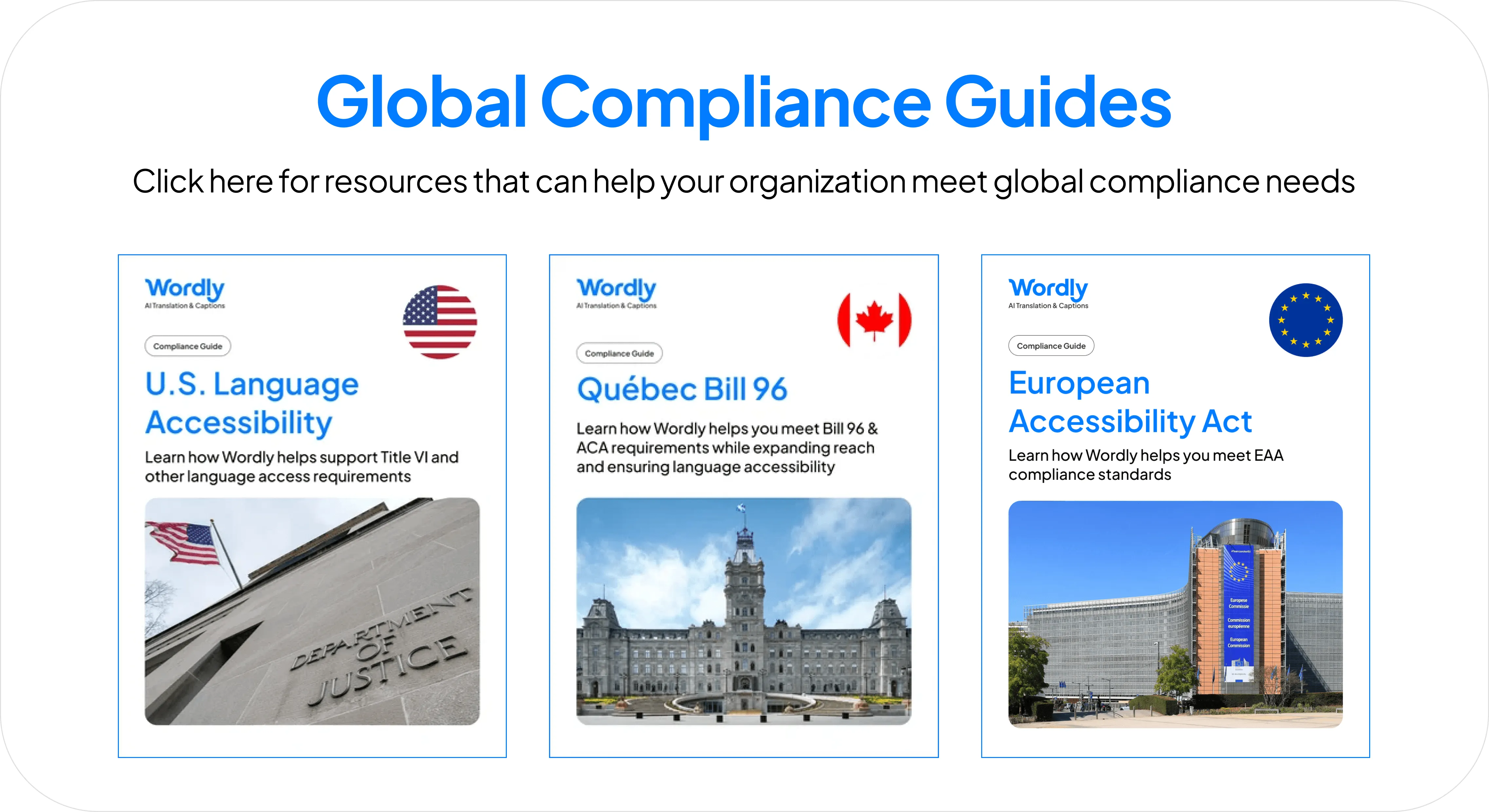
Deckt Anforderungen auf Bundes-, Landes- und kommunaler Ebene ab, einschließlich Title VI, ADA Title II, der endgültigen Entscheidung des DOJ, Executive Orders sowie landesspezifischer Vorgaben wie California SB 707 und Quebec Bill 96. Leitfaden zur behördlichen Compliance lesen.
Compliance bei der sprachlichen Barrierefreiheit für KMU
Deckt ADA-, Section 508- und Title VI-Standards für kleine und mittlere Unternehmen ab, inklusive praktischer Anleitungen für Organisationen ohne eigenes Compliance-Team. Leitfaden zur KMU-Compliance lesen.


.png)

Wordly.ai ist in mehreren Sprachen verfügbar, indem Sie den Selektor oben auf jeder Seite verwenden. Wordly ist auf Live-Audio Übersetzungen spezialisiert und wurde nicht zur Lokalisierung dieser Website verwendet.