The AI Interpretation Tipping Point (Why Humans Are No Longer the Default)
.avif)
.avif)
The Quality Debate is Officially Over
For years, organizations hesitated to adopt AI translation tools, treating them as a promising but highly unpredictable alternative to human interpreters. But according to the 2026 State of AI Translation & Captions Report, quality objections have dissolved. AI is no longer the backup option, it’s the default.
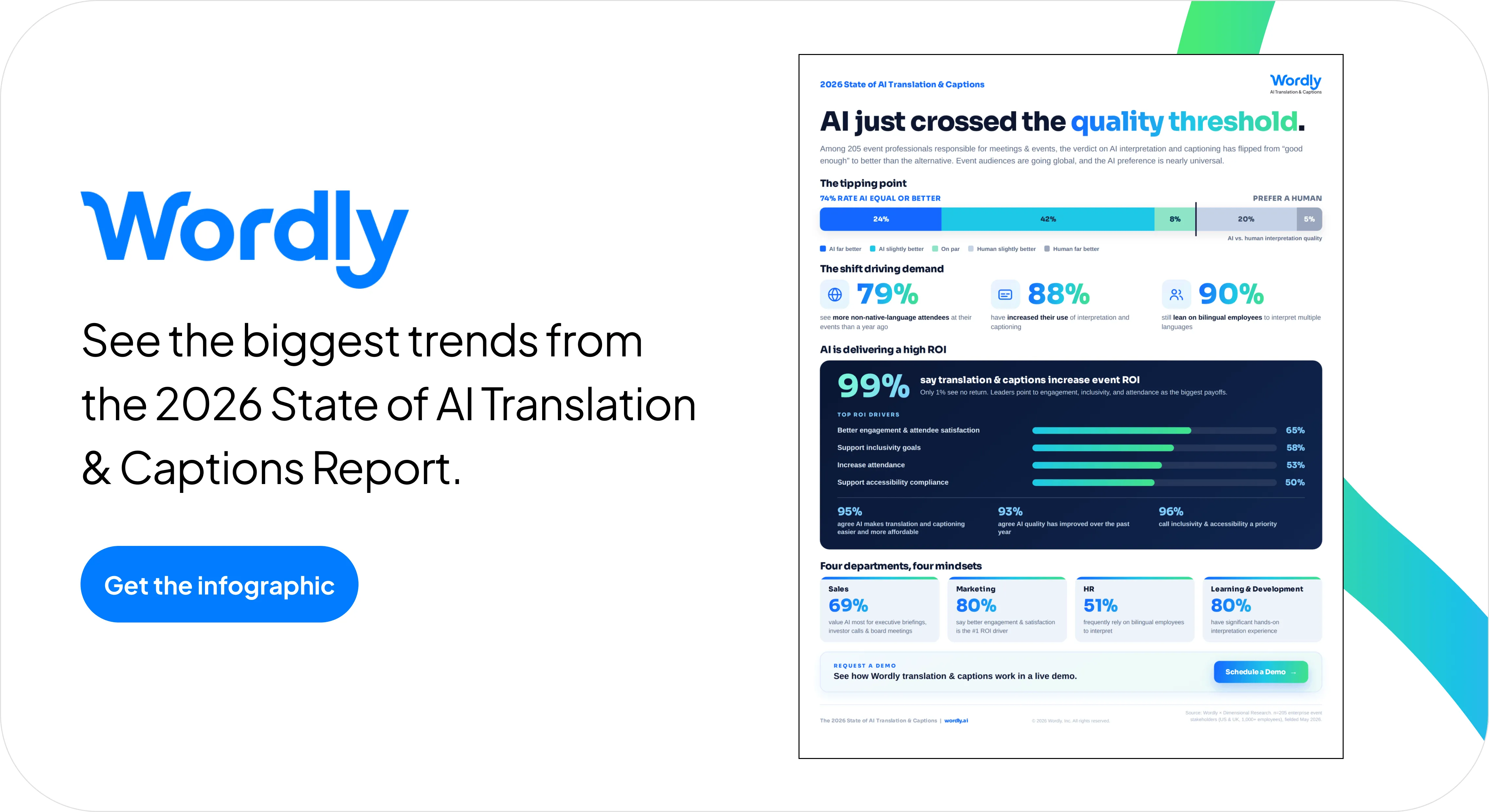
For a high-level overview of how event professionals compare the two, check out the Wordly 2026 State of AI Translation Infographic.
About the Report
This independent industry study, The 2026 State of AI Translation & Captions, was commissioned by Wordly and conducted by Dimensional Research to establish the definitive benchmark for AI translation, interpretation and captioning quality, adoption, and ROI in enterprise organizations.
How the Perception of AI Quality Has Flipped
When asked to rate live AI translation against traditional human interpreters, the results show a clear consensus:
- 66% of enterprise respondents say AI interpretation quality is better than human translation (24% "far better," 42% "slightly better").
- 8% see no difference in quality between the two.
- Only 25% still prefer traditional human interpreters.
Put simply, nearly three-quarters (74%) of buyers now rate AI translation as equal to or better than human interpreters. This near-universal confidence explains why live AI captions and interpretation are now the corporate standard.
Corporate Event Decision Makers are the Most Convinced
The sentiment is strongest among the executives and marketing leaders who own budget decisions:
- Executives: 73% agree AI is better.
- Marketing Leaders: 70% agree AI is better.
- L&D Professionals: 68% agree AI is better.
- Sales Leaders: 64% agree AI is better.
- HR Leaders: 62% agree AI is better.
The Real Blockers to Live Translation and Captions are Logistical
When businesses fail to provide language support, it is rarely due to cost or quality concerns. The top barriers to deployment are logistical headaches:
- Complexity of scheduling humans (34%)
- Managing physical equipment and audio hardware (28%)
- Unreliable translation vendors (25%)
By using cloud-based AI translation, organizations completely bypass the scheduling, equipment management, and vendor problems that stall human setups.
This logistical ease is pushing companies to expand their workflows to include AI translation and caption solutions. In addition to real-time interpretation, companies are looking to post-event capabilities. You can discover what tools are trending in our guide to the future of the multilingual event lifecycle.
Frequently Asked Questions
Is AI translation better than human interpretation?
According to the 2026 State of AI Translation Report, 66% of enterprise event leaders believe that AI interpretation quality is superior to human interpretation, while 74% rate it as at least equal or better. Only 25% of enterprise leaders still express a preference for human interpreters.
What is the main barrier preventing organizations from offering translation services?
The biggest barriers are administrative, not financial or quality-based. The leading challenges are the complexity of finding and scheduling human interpreters (34%) and managing specialized physical audio equipment (28%).
Which corporate roles are most confident in the quality of AI translation?
Budget-holding executives (73%) and marketing leaders (70%) are the most convinced that AI translation quality has caught up to and surpassed human interpretation.
2026 State of AI Translation & Captions
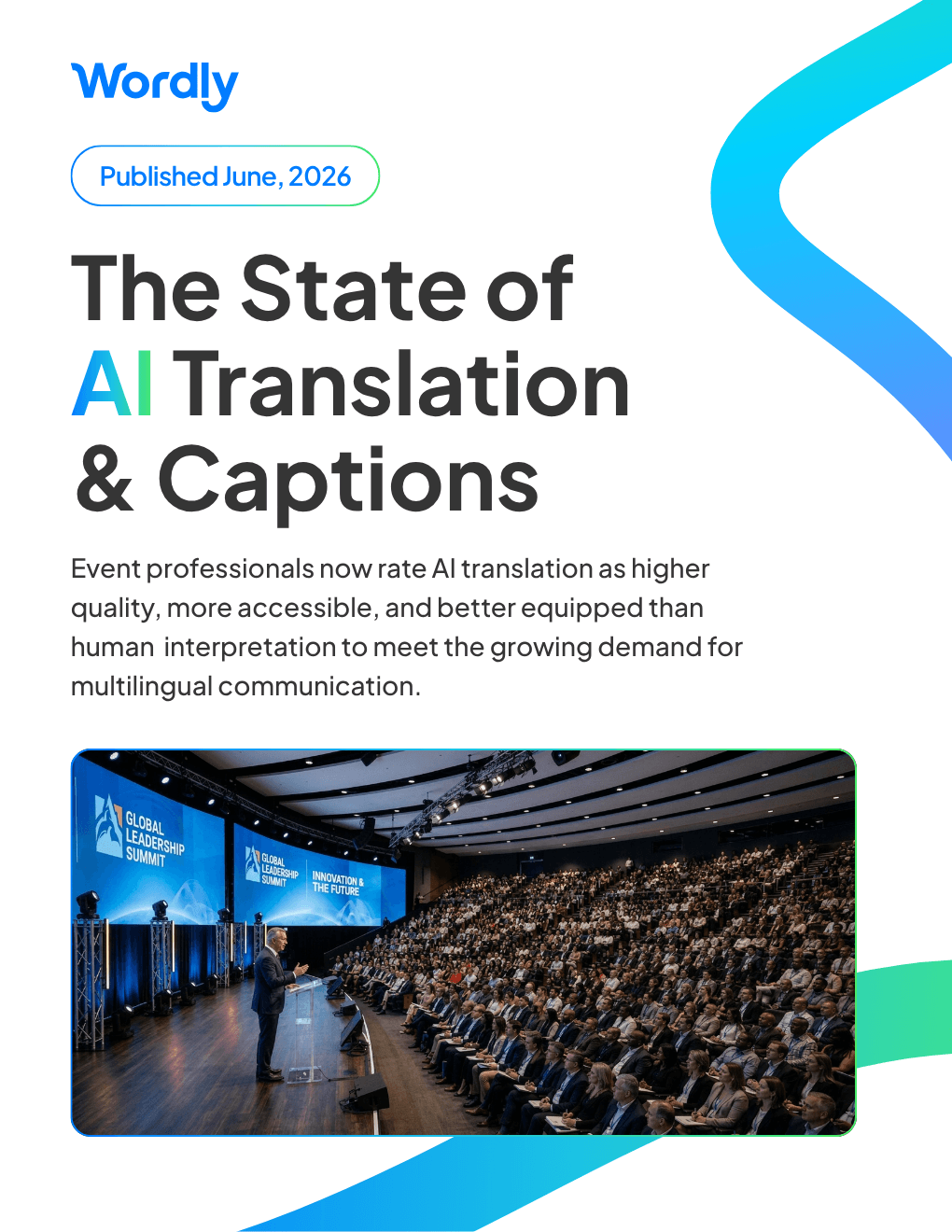
Wordly's fourth annual report surveyed 205 enterprise leaders across the US and UK on multilingual meetings and events. Download the full 2026 report for the complete data on rising demand, near-universal AI adoption, why 66% now say AI beats human interpreters, and how buyers research and choose these tools.
Download ReportSee Wordly in Action
Bring live AI translation, captions, and summaries to your next meeting or event in dozens of languages, so everyone can follow along in their preferred language. Book a demo to see Wordly in action.


.png)
