Seamless live event translation & captions made easy. [Watch 3-Min Demo]
.avif)
.avif)
A voice interpreter is a tool or service that translates spoken language in real time, enabling people who speak different languages to communicate naturally at meetings, conferences, and events. Voice interpreters fall into two main categories: human professional interpreters and AI-powered voice interpretation platforms. The right choice depends on the conversation's stakes, audience size, language requirements, and budget. Wordly's AI voice interpreter delivers real-time interpretation in dozens of languages with no booth equipment, no scheduling overhead, and a per-event cost that's a fraction of traditional human interpretation, making it the practical choice for most modern multilingual meetings and events.
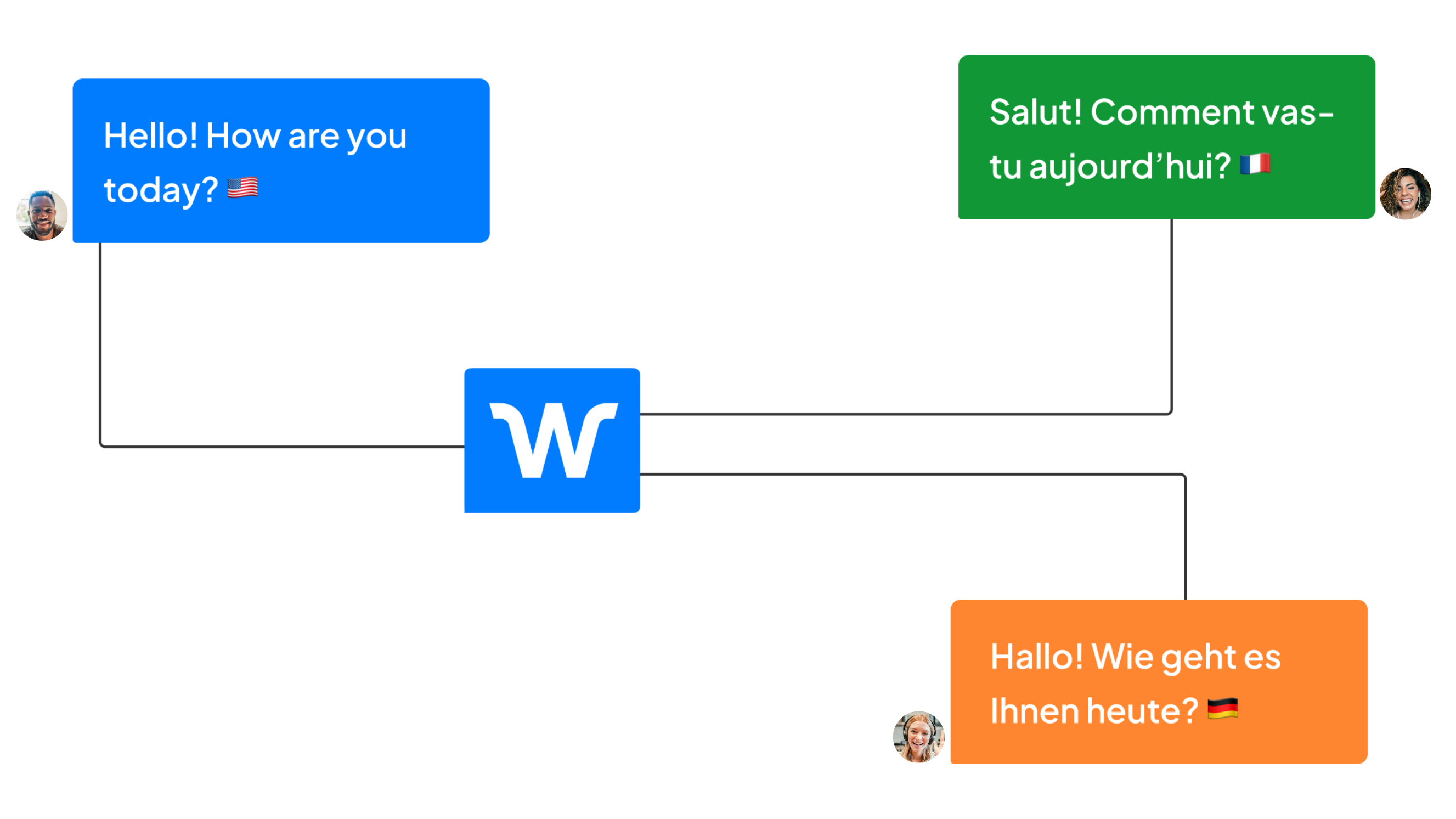
Voice interpretation, also known as simultaneous interpretation, has progressed from rudimentary translation software to sophisticated AI-driven platforms capable of real-time multilingual communication. Innovations such as neural machine translation and natural language processing (NLP) have drastically improved accuracy, context awareness, and user experience. These advancements mean that businesses and individuals now have more reliable and affordable voice interpretation options than ever before.
When selecting a high-quality voice interpreter, it's important to consider various factors, including:
Choosing the right voice interpreter is crucial for ensuring inclusivity, engagement, and comprehension. Language barriers can hinder communication and reduce productivity, making it essential to have an effective interpretation solution in place. Without proper voice interpretation, participants may struggle to fully engage in conversations, leading to inefficiencies and misunderstandings.
For businesses, voice interpretation can be a game-changer. It helps companies expand their reach into global markets, improves collaboration with international partners, and enhances customer experiences by offering multilingual support.
There are three primary approaches organizations take when considering voice interpretation for their meetings and events:
When choosing between human and AI-powered interpreters, it’s essential to consider your specific needs. Human interpreters excel in culturally sensitive and high-stakes conversations, while AI solutions offer speed, scalability, and affordability. Each option has its strengths and limitations, making the right choice dependent on factors like language complexity, budget, and event size.
Some organizations adopt a hybrid model, combining AI-powered interpretation for general use with human interpreters for critical or culturally sensitive discussions. This approach optimizes cost while maintaining high accuracy where needed. However, if you have a high-quality AI voice interpreter, you can provide accurate interpretation while keeping your budget in check.
Wordly offers a next-generation AI-powered voice interpreter platform designed to make multilingual meetings and events more inclusive and productive. Unlike traditional methods, Wordly eliminates the need for human interpreters, reducing costs while providing seamless, 24/7 real-time translation.
Wordly’s AI-powered voice interpreter processes spoken language and instantly translates it into multiple languages. Attendees can receive translations through audio output or real-time captions on their devices, ensuring that everyone can participate fully in discussions, regardless of their native language.
Implementing AI-powered interpreters can transform the way your organization handles multilingual communication. However, a successful rollout requires careful planning and strategic execution. By following a structured approach, you can ensure seamless integration and maximize the benefits of AI-driven interpretation.
Determine whether you need AI interpretation for internal meetings, client interactions, or large-scale events. Consider factors like audience size, language diversity, and industry-specific terminology to make an informed decision.
Compare providers to see which offers the best features, language support, and interpreter pricing for your needs. Look for providers that offer real-time translation, multi-language capabilities, and integration with your existing communication tools.
Use AI interpretation in a few meetings to gauge effectiveness before rolling it out organization-wide. Gather feedback from users and assess the accuracy, speed, and reliability of the platform in real-world scenarios.
Ensure employees know how to access and use the AI interpreter to maximize efficiency. Provide hands-on training, tutorials, and guidelines to help users navigate the system smoothly.
Gather feedback and make necessary adjustments to enhance user experience. Regularly review usage reports and address any issues to optimize performance and user satisfaction.
AI-powered voice interpreters have applications across nearly every industry and setting where people speak different languages. Here's how organizations are putting them to work.
Multi-day conferences and trade shows use voice interpreters to make every session, keynote, and breakout accessible to global attendees in their preferred language, without renting interpretation booths or coordinating teams of human interpreters across multiple languages. AI voice interpreters scale to dozens of languages from the same source, giving every attendee equal access on their own device.
Multinational companies use voice interpreters for global all-hands meetings, board meetings, sales kickoffs, leadership briefings, and customer or partner meetings. Voice interpretation removes the friction of working across language barriers, lets every employee contribute in their preferred language, and helps decisions move faster across distributed teams.
Corporate training, training translation for global workforces, professional development sessions, and certification programs all benefit from voice interpretation. Consistent training delivered in every learner's preferred language improves comprehension, retention, and outcomes across regions.
Voice interpreters expand the reach of webinars beyond the host's language, letting global audiences participate in real time. The same session can be delivered live in dozens of languages, and post-event transcripts in every language extend the value of the content long after the webinar ends.
City councils, county boards, state agencies, and federal departments use voice interpreters to comply with language access requirements (Title VI, California SB 707, ADA Title II) and to give Limited English Proficiency residents meaningful access to public meetings, hearings, and constituent services.
K-12 districts, higher education institutions, and learning programs use voice interpreters for parent-teacher conferences, IEP meetings, student orientation, faculty meetings, and multilingual classrooms. Education translation reaches families and students whose home languages aren't represented by available interpreters.
Houses of worship use voice interpreters to welcome members of every language background into Sunday services, Bible studies, prayer groups, and community events. Church translation makes inclusive worship practical for congregations in linguistically diverse neighborhoods.
Membership associations and nonprofit organizations use voice interpreters to make committee meetings, chapter programming, conferences, and member events accessible to international and multilingual members, expanding reach and engagement.
Corporate translation extends voice interpretation into HR, internal communications, town halls, and employee resource group meetings, giving every employee equal access to company information regardless of their preferred language.
Sales teams use voice interpreters for international client meetings, partner negotiations, and deal reviews, removing language as a barrier to building relationships and closing global business.
Medical conferences, continuing education, and patient-facing meetings use voice interpreters to support multilingual clinicians, patients, and family members in clinical and educational settings.
These are just the most common applications. To explore voice interpreter use cases across every industry and setting Wordly supports, see the full Wordly translation services use cases page.
The demand for multilingual meetings and events is growing. Research shows that 65% of event planners recognize translation as a key factor in inclusivity, yet only 33% currently implement solutions to address language barriers. By integrating AI-powered voice interpreter solutions like Wordly, organizations can unlock new opportunities, enhance collaboration, and ensure every participant is fully engaged.
Providing top-notch interpretation services is no longer a luxury—it’s a necessity. Organizations that prioritize language accessibility stand to gain increased participation, improved communication, and a stronger global presence.
A voice interpreter uses speech recognition to capture spoken audio, machine translation to convert it into the target language, and either text-to-speech synthesis or on-screen captions to deliver the translation to listeners. Modern AI voice interpreters handle the entire workflow in seconds, with delays typically under three seconds, allowing natural conversation across languages.
A voice interpreter handles spoken language in real time, converting one language to another as the conversation happens. A translator typically works with written content, has more time, and produces a polished final document. Voice interpretation is sometimes called simultaneous interpretation because the translation happens during the conversation, not after.
Modern AI voice interpreters reach 95-99% accuracy on clear audio with single speakers and well-supported languages. Human interpreters typically reach 99% or higher in the same conditions, especially for culturally sensitive or industry-specific content. The accuracy gap narrows further when AI tools are paired with customizable glossaries that preload industry-specific terms.
Yes. AI voice interpreters can translate a single source language into dozens of target languages simultaneously, with each attendee selecting their preferred language on their own device. This is one of the biggest advantages over human interpretation, which typically requires one interpreter per language pair.
Human voice interpreters typically cost $200 to $1,000+ per day per language pair, plus travel and equipment costs for in-person events. AI voice interpreters are sold as subscription or per-hour pricing, typically $1 to $10 per hour of interpretation across all languages combined. For multilingual events with three or more languages, AI voice interpreters are dramatically more cost-effective.
AI voice interpreters typically work on attendees' own phones, tablets, or laptops with no special hardware required. Attendees join via a link or QR code and select their preferred language. Human interpretation usually requires headsets, receivers, and sometimes interpretation booths, all of which add cost and logistics.
Enterprise-grade voice interpreters protect meeting audio with industry-standard encryption and offer clear data privacy controls. Look for providers with ISO 27001 certification, SOC 2 Type II compliance, and explicit data handling agreements before deploying voice interpretation in sensitive contexts like legal, medical, or government meetings.
As AI technology continues to evolve, voice interpretation will only improve. Future advancements may include better contextual awareness, real-time emotion recognition, and more accurate handling of regional dialects. The organizations that embrace these innovations today will be the ones leading in global communication tomorrow.
Enhance your meetings and events with Wordly’s AI-powered voice interpretation. Book a meeting today to learn how our platform can transform your multilingual communication needs. Whether you’re hosting a large conference, managing international clients, or conducting multilingual training sessions, Wordly ensures that language is never a barrier to success.
.png)