
Beyond Real-Time: The Future of the Multilingual Event Content Lifecycle
.avif)
.avif)
The Post-Event Frontier for Multilingual Tech
The objective of event translation is no longer just "translate the words in the room". In 2026, the expectations of buyers have evolved. Event planners want technology that scales across the entire content lifecycle of their meetings — supporting before, during, and after-the-event content production.
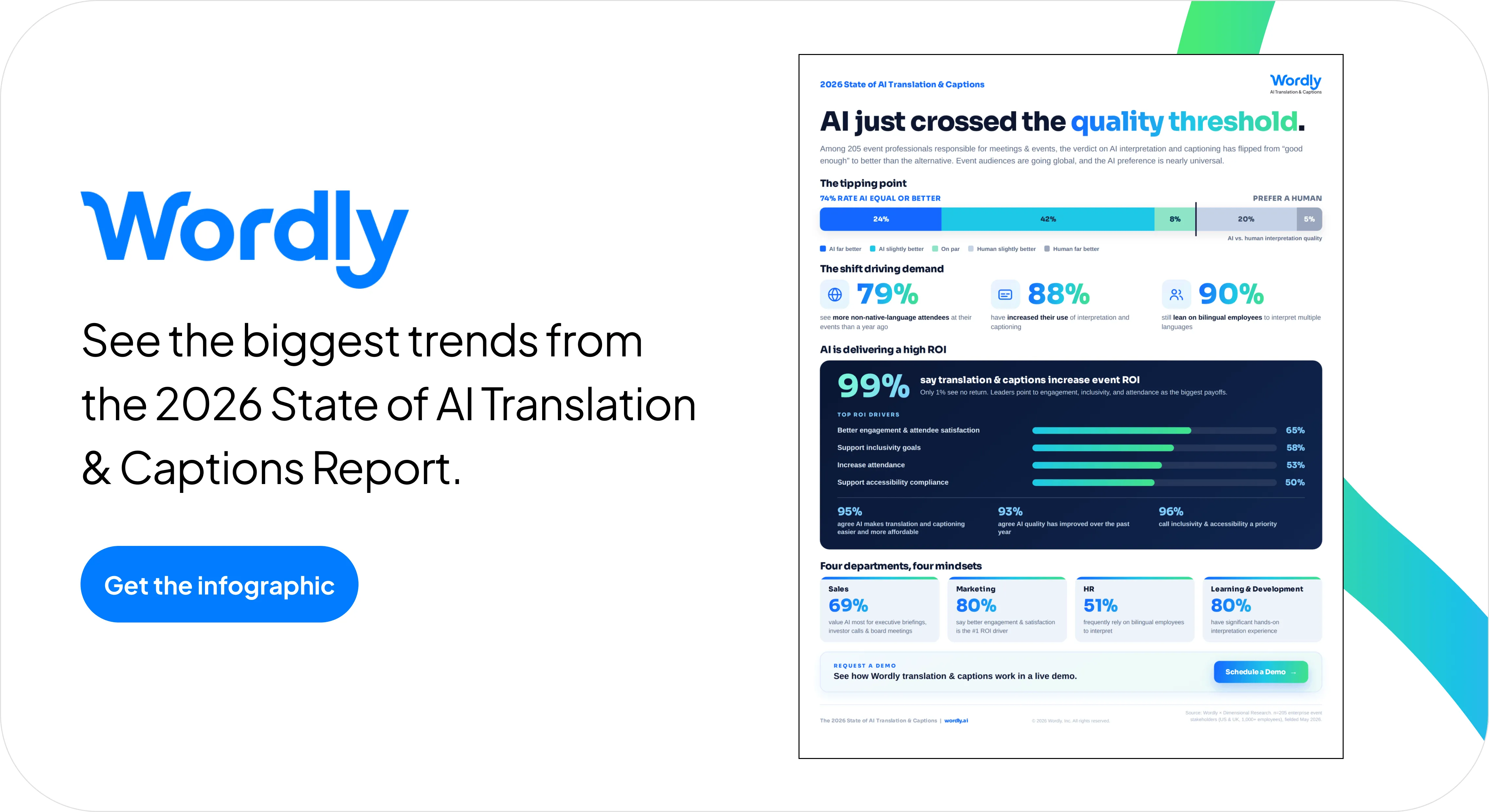
To read the complete research behind these lifecycle trends, check out the 2026 State of AI Translation & Captions Report. You can also view a graphic summary of these future demands in the 2026 State of AI Translation Infographic.
About the Report
This independent industry study, The 2026 State of AI Translation & Captions, was commissioned by Wordly and conducted by Dimensional Research to establish the definitive benchmark for AI translation, interpretation and captioning quality, adoption, and ROI in enterprise organizations.
The Post-Event Feature Wish List
An incredible 97% of event buyers want capabilities that go beyond basic real-time translation and captions. Here are the key post-event features buyers are demanding:
- 61% want high-quality real-time live output.
- 58% want complete, structured written transcripts in all translated languages.
- 53% want subtitle files and AI-dubbed voice files for recorded video playback.
- 51% want automated meeting notes complete with key action items.
- 50% want marketing-ready summaries formatted for quick post-event distribution.
These extended post-event features represent a major step forward from the standard live-stream. For context on where the baseline stands today, explore our breakdown of why live AI captions and interpretation are now corporate default.
How Post-Event AI Features Benefit Audiences
When companies provide ongoing access to multilingual summaries, notes, and recordings, the audience gets a better experience. When surveyed, 98% of buyers said their audiences would benefit from AI-driven content lifecycle features:
- 59% report increased audience participation and engagement.
- 56% note better accessibility compliance for hard-of-hearing attendees.
- 56% report general increases in overall attendee satisfaction.
- 55% point to better retention, learning, and comprehension.
Delivering this end-to-end content lifecycle represents a major upgrade over legacy processes. Learn more in our article about the hidden risks of using bilingual employees to translate internal meetings.
Frequently Asked Questions
What post-event capabilities does AI translation offer?
Modern AI translation tools offer features that go far beyond real-time captions. 97% of buyers seek post-event capabilities like transcripts, automated meeting notes, marketing summaries, and AI voice dubbing to extend event value.
What are the most requested AI translation features beyond live streaming?
Event professionals are looking for the full lifecycle support. The top-requested capabilities include multilingual written transcripts (58%), subtitle and video dubbing files (53%), and automated meeting notes with key action items (51%).
How does post-event multilingual content benefit event attendees?
Over 98% of enterprise leaders state that post-event AI features provide immense value, such as boosting long-term audience participation (59%), supporting accessibility (56%), and improving content comprehension (55%).
2026 State of AI Translation & Captions
Wordly's fourth annual report surveyed 205 enterprise leaders across the US and UK on multilingual meetings and events. Download the full 2026 report for the complete data on rising demand, near-universal AI adoption, why 66% now say AI beats human interpreters, and how buyers research and choose these tools.
Download ReportSee Wordly in Action
Bring live AI translation, captions, and summaries to your next meeting or event in dozens of languages, so everyone can follow along in their preferred language. Book a demo to see Wordly in action.


.png)
