
The Hidden Risk of Using Bilingual Staff to Translate Internal Meetings
.avif)
.avif)
The Silent Strain on Multilingual Teams
While corporations regularly pay for professional translation services at large, customer-facing conferences, they treat internal meetings differently. To bridge internal language barriers, organizations often resort to a risky workaround: asking bilingual employees to translate on the fly.
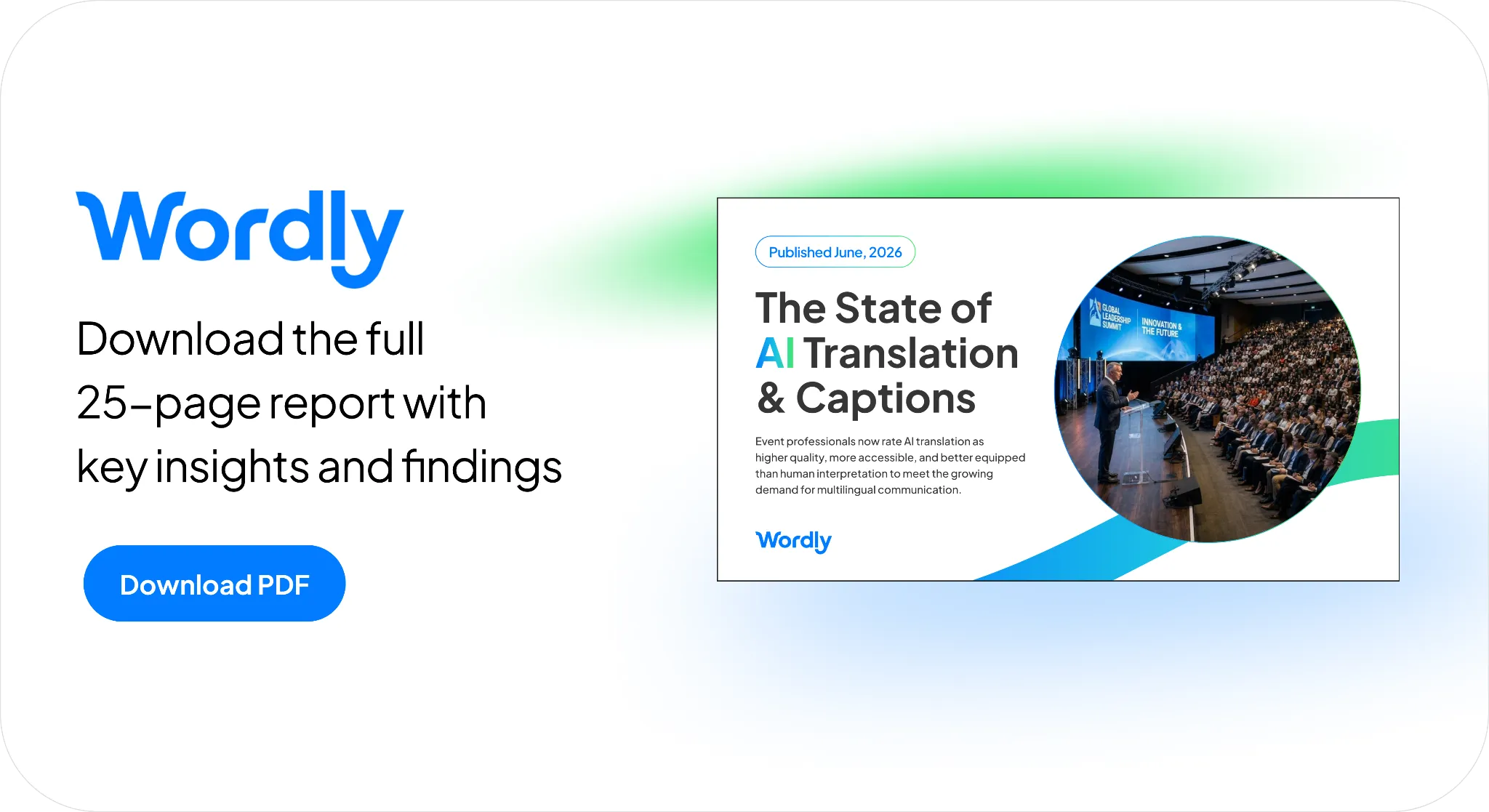
This practice has become a trend across the corporate landscape. To see the numbers, read the full 2026 State of AI Translation & Captions Report or review the visual data points in our 2026 State of AI Translation Infographic.
About the Report
This independent industry study, The 2026 State of AI Translation & Captions, was commissioned by Wordly and conducted by Dimensional Research to establish the definitive benchmark for AI translation, interpretation and captioning quality, adoption, and ROI in enterprise organizations.
A Universal Workaround
Our study found that 90% of organizations have relied on bilingual employees to translate internal meetings rather than deploying dedicated translation technology.
- In the US: 93% of respondents admit to relying on bilingual employees (51% frequently, 42% rarely).
- In the UK: 86% rely on bilingual employees (23% frequently, 63% rarely).
As language diversity continues to grow rapidly in modern workforces, this manual approach is reaching its breaking point. Learn more in our post on why multilingual audiences are growing fast and the languages you are missing.
Why the "Bilingual Workaround" is a Serious Risk
Leaning on internal staff for language support introduces hidden operational, cultural, and productivity risks to your organization:
- It introduces a single point of failure: If your bilingual employee is sick, traveling, or leaves the company, your meeting accessibility immediately breaks down.
- It taxes your best talent: Translating in real-time is an exhausting cognitive skill. Forcing a team member to translate prevents them from actively participating, sharing their professional expertise, or focusing on their actual job duties.
- It doesn't scale: A single bilingual employee can translate only one language pair at a time. If your internal training or town hall hosts speakers of multiple languages, this workaround immediately falls short.
"Asking your bilingual staff to act as makeshift interpreters taxes your most valuable assets, limits their participation, and introduces an unnecessary operational risk."
Fortunately, always-on AI tools make it seamless to replace this workaround while protecting your team. Read our review of why AI translation has officially crossed the quality threshold and human translation is no longer the default.
Frequently Asked Questions
Is it safe to use bilingual employees to translate business meetings?
While 90% of organizations use bilingual employees to translate internal meetings, experts warn this practice creates a single point of failure, strains your team, and halts real-time meeting collaboration. Always-on AI translation scales seamlessly and lets bilingual staff focus on their core responsibilities.
What percentage of companies rely on bilingual employees for translation?
A vast majority of businesses rely on this workaround. 93% of organizations in the US and 86% of organizations in the UK depend on bilingual employees to handle translation for internal meetings.
How does relying on internal staff for translation impact employee productivity?
Acting as an on-the-fly interpreter requires intensive cognitive effort, which prevents the employee from actively participating in the meeting, sharing their professional insights, or focusing on their actual job responsibilities.
2026 State of AI Translation & Captions
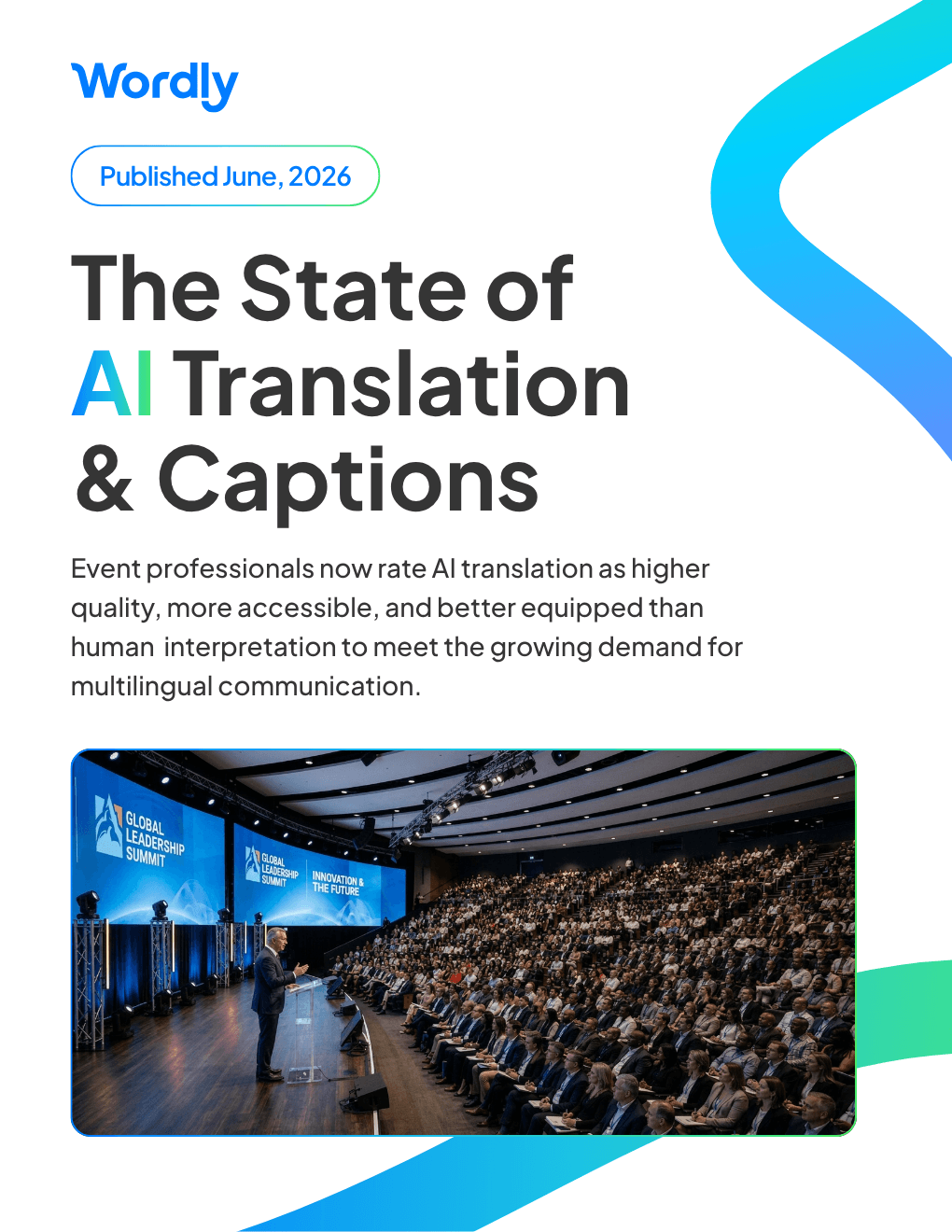
Wordly's fourth annual report surveyed 205 enterprise leaders across the US and UK on multilingual meetings and events. Download the full 2026 report for the complete data on rising demand, near-universal AI adoption, why 66% now say AI beats human interpreters, and how buyers research and choose these tools.
Download ReportSee Wordly in Action
Bring live AI translation, captions, and summaries to your next meeting or event in dozens of languages, so everyone can follow along in their preferred language. Book a demo to see Wordly in action.


.png)
