
会議およびイベントの言語アクセスコンプライアンスガイド:ADAおよびタイトルIIIの要件
.avif)
.avif)
目次:
- イベントにおける言語アクセスの重要性
- カンファレンスやイベントでADA(障害を持つアメリカ人法)第III編のコンプライアンスを確保するには?
- 連邦政府の助成を受けるイベントにおける第VI編の要件とは?
- デジタルイベントプラットフォームへのアクセシビリティの適用
- 翻訳テクノロジーを活用したアクセシビリティの拡大
- イベントセキュリティとAIツールのバランス
- 多様な参加者層へのサポート
- 騒がしい会場でキャプションが必要な理由
- イベントのアクセシビリティでよくある間違いとは?
- カンファレンスの言語アクセスコンプライアンスに関するよくある質問
- イベント主催者が次に取るべきステップ
本情報は法的助言を目的としたものではありません。貴社の具体的な要件については、法務チームにご相談ください。
米国内のカンファレンスやイベントは、ADA(障害を持つアメリカ人法)第III編を遵守しなければなりません。これには、障害のある参加者が円滑にコミュニケーションをとれるよう、リアルタイムのキャプションや通訳といった補助的な手段やサービスを提供することが義務付けられています。また、連邦政府の助成を受けるイベントは、公民権法第VI編も遵守する必要があり、英語が堪能でない方々に対しても翻訳サービスを通じて有意義なアクセスを提供しなければなりません。WordlyのようなAI搭載プラットフォームを活用すれば、基調講演や分科会、デジタルイベントプラットフォームにおいて、数十言語のライブキャプションや翻訳を、従来の人的通訳よりもはるかに低コストで提供でき、両方の基準を満たすことが可能になります。
イベントにおける言語アクセスの重要性
カンファレンスや大規模なイベントの開催には、会場の確保から基調講演者の最終決定まで、数え切れないほどの準備が必要です。しかし、グローバル化が進む現代において、言語アクセスという極めて重要な要素が、直前まで見落とされてしまうことがよくあります。
イベントは、知識を共有し、ネットワーキングを促進するために企画されます。もし参加者の一部が、言語の壁や聴覚障害のために内容を理解できない場合、そのイベントは彼らにとって本来の目的を果たせていないことになります。
イベントの運営面での成功に加え、コンプライアンスも重要な要素です。連邦法では、障害や国籍に基づく差別が禁止されています。イベントプランナーにとって、これは開催前からリアルタイムのキャプションや翻訳といった配慮を計画しておくことを意味します。
カンファレンスやイベントでADA(障害を持つアメリカ人法)第III編のコンプライアンスを確保するには?
ほとんどのカンファレンスや展示会は、 ADA(障害を持つアメリカ人法)第III編の対象となります。これには、ホテル、コンベンションセンター、講堂など、一般に公開されている民間運営の施設が含まれます。
ADAに基づき、イベント主催者は、聴覚障害者や難聴者との効果的なコミュニケーションを確保するために「補助的な支援やサービス」を提供しなければなりません。
コンプライアンスを確保するために:
- 早期のニーズ評価: 登録フォームに、手話通訳やCART(リアルタイム文字通訳)サービスなどの配慮が必要かどうかを尋ねる項目を設けてください。
- リアルタイムのソリューションを提供: 基調講演やパネルディスカッションでは、ライブキャプション(リアルタイム字幕)が効果的な支援手段として広く活用されています。
- スタッフのトレーニング: 会場スタッフやボランティアが、アクセシビリティ機器やサービスの利用を希望する参加者への対応方法を理解していることを確認してください。
言語通訳 サービスをアクセシビリティ計画に組み込み、関係者が必要な時にサポートを要請できるようにしておく必要があります。
連邦政府の資金提供を受けるイベントにおけるTitle VI(第VI編)の要件とは?
学術会議、研究サミット、非営利団体の集会などでよく見られるように、イベントが連邦政府の財政支援を受けている場合、以下の要件を遵守しなければなりません。 言語アクセス に関する要件 1964年公民権法第VI編.
公民権法第6編は、人種、肌の色、出身国に基づく差別を禁止しています。最高裁判所は、「出身国」に基づく差別には、英語能力が制限されている(LEP)個人に対する差別も含まれると解釈しています。
これは、連邦政府から資金提供を受けている団体は、LEPの個人が「有意義なアクセス」を確保できるよう、合理的な措置を講じなければならないことを意味します。「合理的な措置」を決定する要因には以下が含まれます。
- 対象となるサービス利用者のうち、LEPの個人が占める人数または割合。
- LEPの個人がプログラムに接触する頻度。
- 提供されるプログラム、活動、またはサービスの性質と重要性。
- 受給者が利用可能なリソースとコスト。
海外からの参加者や多様な地域住民が集まる大規模なカンファレンスでは、この基準を満たすために通訳サービスを提供することが不可欠となる場合が多くあります。
デジタルイベントプラットフォームにおけるアクセシビリティの適用
コンプライアンス戦略は、物理的な会場だけでなく、デジタル領域にも広げる必要があります。カンファレンス用アプリ、登録サイト、バーチャルイベントプラットフォームは、すべてアクセシブルであるべきです。
- WCAG 2.1への準拠: イベントのウェブサイトがWebコンテンツ・アクセシビリティ・ガイドライン(WCAG)2.1のレベルAAに適合していることを確認してください。これには、スクリーンリーダーが登録フォームを読み取れるようにすることや、プロモーション動画などに正確な字幕を付けることが含まれます。
- 多言語ナビゲーション: 英語を母国語としない参加者が多数見込まれる場合は、スケジュールや会場マップを自力で確認できるよう、デジタル資産に翻訳オプションを用意しておくべきです。
翻訳テクノロジーを活用したアクセシビリティの拡大
かつては、カンファレンスのすべてのセッションに通訳を配置することはコスト面で非常に困難であり、言語ごとに防音ブースや通訳チームを手配する必要がありました。
AIを活用した翻訳テクノロジーが、この分野に革命をもたらしました。Wordlyのようなソリューションを利用すれば、イベント主催者は、機材配布といった煩雑な作業なしに、数十もの分科会でリアルタイムの音声翻訳や字幕提供を同時に行うことができます。
このテクノロジーは、以下の方法でコンプライアンスをサポートします。
- コスト障壁の低減: メインステージだけでなく、すべてのセッションで「有意義なアクセス」を低コストで提供します。
- 利用可能性の向上: 現地での手配が困難な言語や希少言語に対しても、オンデマンドのサポートを提供します。
イベントのセキュリティとAIツールのバランス
知的財産、医学研究、政府の政策などを扱う会議では、データセキュリティが何よりも重要です。セッション用のAI翻訳プロバイダーを選ぶ際は、そのセキュリティプロトコルを必ず確認してください。
以下の基準を満たすプロバイダーを選びましょう:
- 音声データを処理に必要な期間を超えて保存しないこと。
- SOC 2などのエンタープライズレベルのセキュリティ基準を遵守していること。
- 明確なデータプライバシー契約を提供していること。
Wordlyのセキュリティ とプライバシー保護により、イベントの機密性の高い議論を保護しつつ、アクセシビリティを確保します。翻訳、文字起こし、要約などの共有方法を完全にコントロールできます。
多様な参加者のサポート
インクルーシブな環境は参加を促進します。言語の壁がネットワーキングや学習の妨げにならないと分かれば、参加登録率は高まります。
数十言語でのライブ翻訳や字幕提供を告知することは、歓迎の意を示す強力なメッセージとなります。これは、世界中から参加者を集めたい国際見本市において特に効果的です。
イベントやウェビナーで字幕が必要な理由
AI字幕 は、聴覚障がいのある方のためだけのものではありません。騒がしく変化の激しいカンファレンスの環境において、非常に大きなメリットをもたらします。
- 展示ホール: 会場の騒音で音声が聞き取りにくい場合でも、スクリーンや個人のデバイスに字幕を表示することで、ブースステージでのプレゼンテーション内容を正確に把握できます。
- 基調講演: 英語を母国語としない参加者にとって、音声を聞きながら字幕を読むことは、複雑な業界トピックの理解度や記憶の定着を大幅に高める効果があります。
- モバイルアクセス: 騒がしい廊下やロビーから同時配信を視聴する参加者でも、モバイルデバイスでテキストを確認しながら内容を追うことができます。
字幕はインクルーシビティ(包摂性)の証でもあり、本来なら個別に配慮を求める必要があった参加者の負担を軽減します。
イベントのアクセシビリティでよくある失敗とは?
毎年ニュースで目にするように、アクセシビリティを完全に軽視したカンファレンスやイベントは、訴訟に発展したり、評判を落としたりしています。よくある失敗例は以下の通りです。
- 事後対応型の計画: 参加者から苦情が出て初めて通訳サービスを手配すること。コンプライアンスは先回りして取り組むべきものです。
- 分科会の軽視: メインステージにはアクセシビリティを確保しても、専門性の高い小規模なセッションを放置してしまうこと。
- 英語だけで十分だという思い込み: グローバル市場において、すべての専門的な議論が英語で円滑に行われると想定することは、貴重な視点や参加者を排除することにつながります。
これらの失敗を避けることは、コンプライアンスの強化と参加者のエンゲージメント向上に役立ちます。
カンファレンスの言語アクセス・コンプライアンスに関するよくある質問
イベントにおけるADA(障害を持つアメリカ人法)とタイトルVI(公民権法第6編)の違いは何ですか?
ADAは障害者へのアクセシビリティ(聴覚障害を含む)に重点を置いており、字幕などの効果的なコミュニケーション支援を義務付けています。一方、タイトルVIは国籍に基づく差別を禁じており、連邦政府の資金提供を受けるイベントにおいて、英語が堪能でない方(LEP)に対して有意義なアクセスを確保することを求めています。
民間のカンファレンスでも通訳者の手配は必要ですか?
ADAタイトルIIIに基づき、公共施設を運営する民間事業者は、過度な負担とならない限り、効果的なコミュニケーションを確保するために必要な補助的手段(通訳や字幕など)を提供しなければなりません。
AI翻訳でタイトルVIの要件を満たすことはできますか?
タイトルVIは「有意義なアクセス」を求めています。高品質なAI翻訳は、すべての言語に対応する人的通訳者の手配が困難な場合でも、多言語への広範なアクセスを即座に提供できるため、コンプライアンス戦略の有効な手段となり得ます。
直前の翻訳依頼にはどう対応すればよいですか?
このような場面でこそAIソリューションが真価を発揮します。Wordlyは即時の導入に最適です。数分でセッションを設定し、数週間前から人的リソースを予約することなく、即座に翻訳や字幕を提供できます。
イベント主催者がとるべき次のステップ
言語の壁によってイベントの成果が制限されたり、コンプライアンス上のリスクにさらされたりすることのないようにしましょう。拡張性の高いAI駆動型のアクセシビリティツールを導入することで、すべての参加者の声が届き、すべてのプレゼンテーションが理解される環境を実現できます。
次のカンファレンスを完全にアクセシブルにする準備はできていますか? デモを予約する Wordlyがどのようにイベントをサポートできるかをご確認ください。
免責事項:本コンテンツは情報提供のみを目的としており、法的助言を構成するものではありません。コンプライアンス義務については、各機関の法務担当者にご相談ください。
関連するコンプライアンスガイド
カンファレンスやイベントを主たる事業としない組織向けに、Wordlyではその他の一般的な状況における言語アクセスコンプライアンスのリソースも公開しています。
企業向け言語アクセスコンプライアンス
多言語での社内コミュニケーション、顧客向けコンテンツ、企業システム全体のデジタルアクセシビリティなど、大規模組織におけるADA、セクション508、WCAGの要件を網羅しています。 企業向けコンプライアンスの詳細を読む.
非営利団体および協会のコンプライアンス
連邦政府の助成金を受けている、または多様なコミュニティにサービスを提供している非営利団体、協会、NGOを対象に、ADA(障害を持つアメリカ人法)、タイトルVI、およびアクセシビリティ要件(イベントプログラムや会員向けコミュニケーションを含む)を網羅しています。 非営利団体および協会のコンプライアンスについて詳しく読む.
中小企業の言語アクセスコンプライアンス
中小企業に適用されるADA、セクション508、およびタイトルVIの基準を網羅し、コンプライアンス専任スタッフがいない組織向けの具体的なガイダンスを提供します。 中小企業のコンプライアンスについて詳しく読む.
政府機関の言語アクセスコンプライアンス
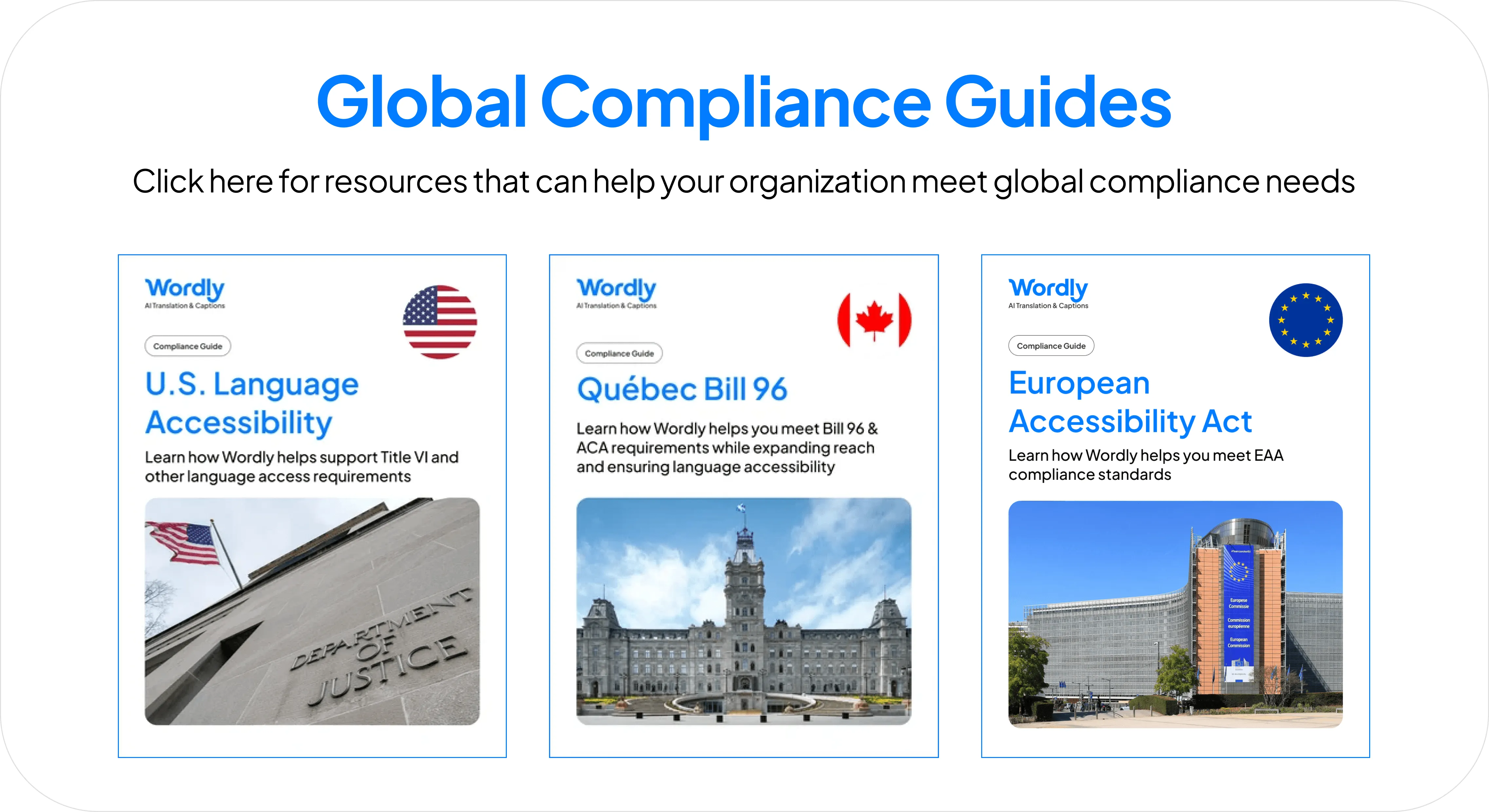
タイトルVI、大統領令、およびカリフォルニア州SB 707やケベック州法案96のような州レベルの義務を含む、連邦、州、地方自治体の言語アクセス要件を網羅しています。 政府機関のコンプライアンスについて詳しく読む.


.png)

Wordly.ai は、サイトの右上にあるセレクターから言語を切り替えてご利用いただけます。Wordly はリアルタイムAI通訳に特化したサービスであり、本サイトの翻訳には使用されていません。